Car acronyms are their own little language, and dealers, mechanics, and forum posts all speak it fluently while assuming you do too. You are shopping for a used car and the listing says “2.0 TDI, DSG, DPF, ESP, cruise,” a light on the dash reads EPC, and the mechanic mentions the VVT solenoid. None of that means anything if nobody ever translated it. This guide is that translation. We will go through the car acronyms you are most likely to run into, grouped so they actually make sense, in plain English, with a note on why each one matters when you are buying or living with a used car.
You do not need to memorize all of these. Skim to the ones you have actually seen, and keep this handy the next time a listing or a warning light throws letters at you.
Engine and fuel type acronyms
These tell you what kind of engine a car has, which affects fuel cost, maintenance, and what can go wrong.
- TDI (Turbocharged Direct Injection). A turbo diesel, common on VW and Audi. Torquey and efficient, but comes with diesel-specific parts like the DPF and EGR that can get expensive; see clogged DPF symptoms.
- TSI / TFSI (Turbocharged Stratified Injection). Turbocharged gasoline direct injection, again mostly VW/Audi.
- GDI / FSI (Gasoline / Fuel Stratified Injection). Direct-injection gasoline engines. Efficient, but many are prone to intake valve carbon buildup over time.
- HEMI. Chrysler’s name for its hemispherical-head V8s, found in Ram, Dodge, and Jeep.
- VTEC / VVT / VVT-i / VANOS. Variable valve timing systems (Honda, generic, Toyota, and BMW respectively). They adjust valve timing for better power and economy. When a VVT solenoid or actuator fails you may get a rough idle, a rattle at startup, or a check engine code.
Turbo and forced induction
- Turbo (turbocharger). Uses exhaust gas to force more air into the engine for more power. Reliable when maintained, but hard on oil; a failed one is pricey, see turbocharger failure symptoms.
- Supercharger. Same goal as a turbo, but belt-driven off the engine instead of exhaust-driven.
- Intercooler. Cools the compressed air from a turbo or supercharger so the engine makes more power reliably.
Transmission acronyms
This is where a lot of buyers get lost, because these letters describe very different gearboxes.
- AT (Automatic Transmission). The general term for a self-shifting gearbox.
- MT (Manual Transmission). A stick shift with a clutch pedal.
- CVT (Continuously Variable Transmission). No fixed gears; a belt or chain varies the ratio smoothly. Efficient but not all are durable.
- DSG / DCT / PDK (Direct Shift Gearbox / Dual Clutch Transmission). A dual-clutch automatic that shifts fast, common on VW, Audi, and many performance cars.
- CVT vs torque converter vs dual-clutch matters a lot when buying used, because repair costs and reliability differ hugely. We break this down in automatic transmission types: which to avoid used.
Safety and driver-assist acronyms
These are the alphabet soup on window stickers and dashboards.
- ABS (Anti-lock Braking System). Stops the wheels from locking up under hard braking so you keep steering control. An amber ABS light usually means a wheel speed sensor fault ($100 to $300).
- ESP / ESC / DSC / VSC (Electronic Stability Program / Control). Detects a skid and brakes individual wheels to keep the car pointed where you steer. Different brands, same idea.
- TCS / ASR (Traction Control System). Stops the driven wheels spinning on slippery surfaces.
- EBD (Electronic Brakeforce Distribution). Balances braking between front and rear.
- TPMS (Tire Pressure Monitoring System). Warns when a tire is low.
- ADAS (Advanced Driver Assistance Systems). The umbrella term for lane-keep assist, adaptive cruise, automatic emergency braking, and so on.
- SRS (Supplemental Restraint System). Your airbags. A lit SRS light means airbags may not deploy, which is both a safety issue and a used-car red flag.
Warning light acronyms
- EPC (Electronic Power Control). A VW/Audi light that means a fault in the throttle or engine management electronics. It can be minor (a sensor) or put the car into limp mode. It always deserves an OBD2 scan to find the actual code.
- CEL / MIL (Check Engine Light / Malfunction Indicator Lamp). The check engine light. Steady means diagnose soon; flashing means an active misfire, so get it looked at fast. Full detail in check engine light: what it means.
- DPF (Diesel Particulate Filter). Traps soot from a diesel exhaust and periodically burns it off. A DPF light means it needs a regeneration drive or is getting blocked.
- EGR (Exhaust Gas Recirculation). Routes some exhaust back into the intake to cut emissions. A common carbon-clogging culprit; see EGR valve symptoms.
Drivetrain and body acronyms
- FWD (Front-Wheel Drive). Engine drives the front wheels. Cheap, efficient, fine for most people.
- RWD (Rear-Wheel Drive). Drives the rear wheels; common on trucks and performance cars.
- AWD (All-Wheel Drive). Sends power to all four wheels automatically, good for traction in rain and snow. More parts to maintain (differentials, transfer case).
- 4WD / 4x4. A more rugged, often selectable four-wheel-drive system on trucks and off-roaders.
- SUV / CUV (Sport Utility / Crossover Utility Vehicle). Tall body styles; a CUV is basically a car-based SUV.
- VIN (Vehicle Identification Number). The car’s 17-character fingerprint, used to pull history reports.
- OEM (Original Equipment Manufacturer). Parts made by or for the carmaker, as opposed to cheaper aftermarket parts.
Why these acronyms matter when buying used
Acronyms are not just trivia when you are shopping. The letters in a listing and on the dashboard tell you what a car will cost to keep. A TDI with a DPF and EGR has diesel-specific failure points a gasoline car does not. A DSG or CVT badge tells you which expensive transmission repairs are possible. An EPC or SRS light glowing on the test drive is a direct hint about money you may spend soon.
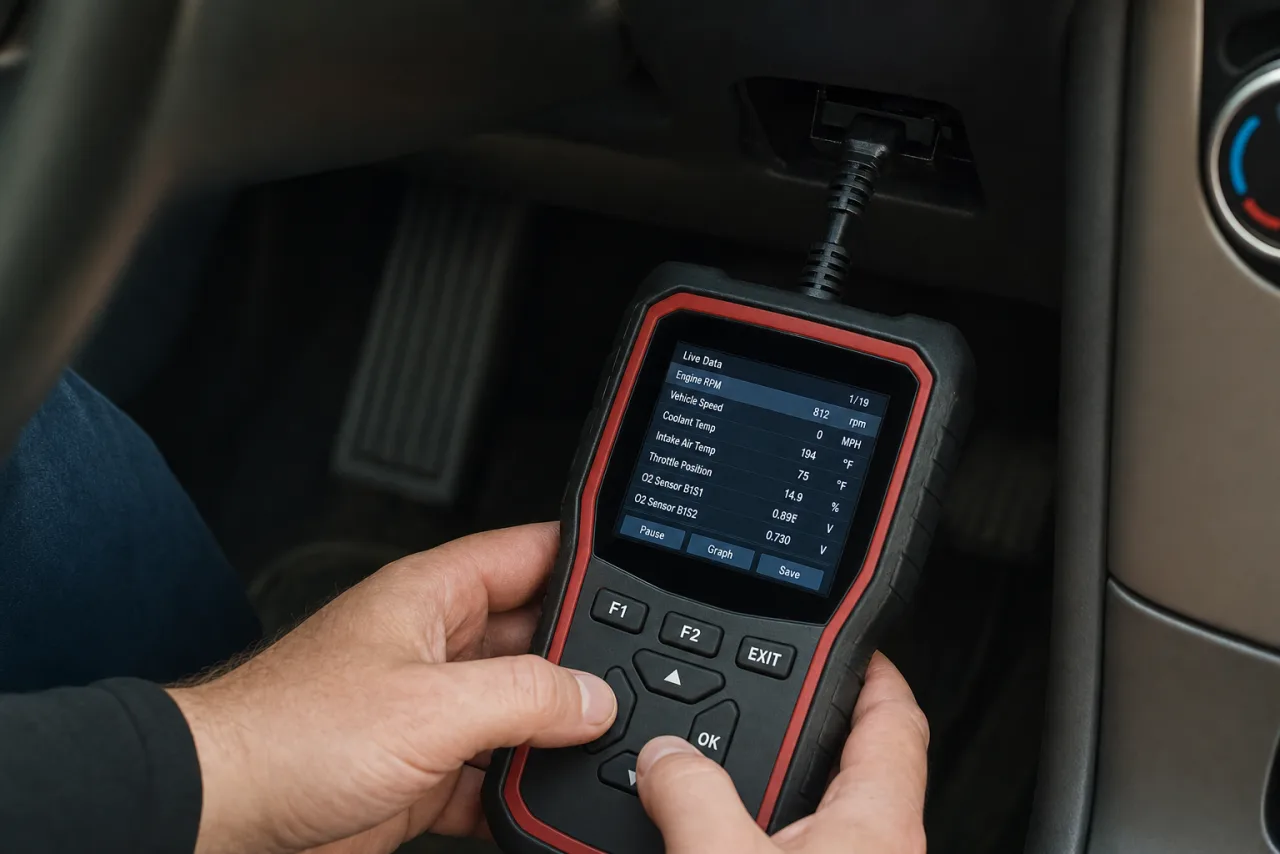
The practical move is to decode the letters, then verify with an OBD2 scan and a proper inspection rather than trusting the seller’s summary. A pre-purchase inspection app like MotoPPI reads the OBD2 codes behind lights like EPC and CEL and walks you through the rest of the checklist, so those acronyms turn into facts instead of surprises. For the full process see how to inspect a used car, and for what ownership really costs, the cost of owning a used car.
The bottom line
You do not need an engineering degree to shop for a car, you just need a translation key for the letters everyone throws around. Learn the handful that describe engine type, transmission, and the warning lights, and a listing full of acronyms stops being intimidating and starts being information. When in doubt, plug in a scanner and let the codes tell you what the letters really mean.