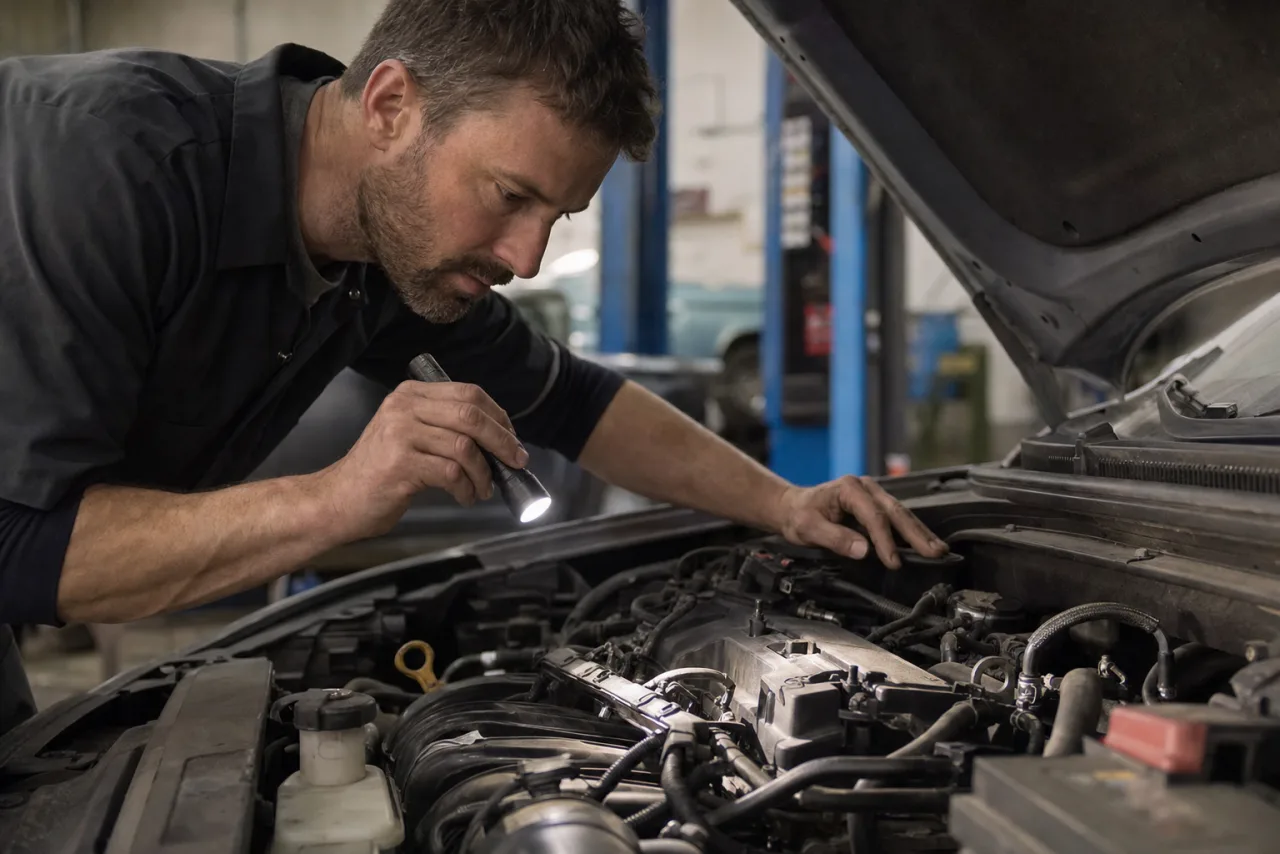
A cracked cylinder head is the kind of engine problem that can quietly end a car’s life. The head bolts to the top of the block and takes the full brunt of combustion heat, so when it overheats badly enough, the metal can split. Sometimes the crack is a hairline you can barely see, sometimes it runs right through a valve seat. Either way, the symptoms overlap heavily with a blown head gasket, which is why people confuse the two and sometimes pay to fix the wrong one. This guide covers what a cracked cylinder head is, the symptoms, how it differs from a head gasket, what the repair costs in the US, and how to catch it before you buy someone else’s overheating problem.
What the cylinder head does and why it cracks
The cylinder head sits on top of the engine block and seals the top of each combustion chamber. It houses the valves, the valve springs, the camshaft on most modern engines, and passages for both coolant and oil. It is usually made of aluminum on modern engines because aluminum sheds heat well and is light, but aluminum also expands and contracts a lot with temperature. That is the weak point.
Almost every cracked head starts with overheating. A car runs low on coolant, the thermostat sticks shut, the water pump fails, or a cooling fan quits, and the head gets far hotter than it was designed for. Aluminum that gets hot enough warps first, then cracks. Once there is a crack, coolant leaks into places it should never be, and the trouble multiplies. This is the same failure chain that produces a blown head gasket, and the two often happen together after a single serious overheat.
Symptoms of a cracked cylinder head
The frustrating part is that a cracked cylinder head rarely announces itself clearly. Common signs include:
- White smoke from the exhaust that smells sweet, from coolant burning in the cylinder.
- Coolant disappearing with no puddle on the ground, because it is going into the engine, not onto the driveway.
- Overheating that keeps coming back no matter how much coolant you add.
- Milky, tan sludge on the oil cap or dipstick, meaning coolant and oil are mixing.
- Rough idle or a misfire if the crack is letting coolant into a cylinder. If you see a misfire code, compare notes with engine misfire symptoms and causes.
- Bubbles in the coolant reservoir while the engine runs, from combustion gases pushing into the cooling system.
- The check engine light or temperature warning lit up on the dash. If you are unsure what a light means, see dashboard warning lights explained.
None of these is proof on its own. Coolant loss alone could be a leaking hose. A misfire alone could be a bad coil. It is the combination, especially loss of coolant plus overheating plus white exhaust smoke, that points at the head.
Cracked head vs blown head gasket: the real difference
This is the question people actually search for, so here is the plain answer. The head gasket is a replaceable seal between the head and the block. A cracked cylinder head is damage to the head casting itself, the metal part.
The symptoms are nearly identical, because both let coolant and combustion gases go where they should not. The difference is what it takes to fix. A blown head gasket often means removing the head, replacing a gasket that costs a fraction of the labor, and reassembling. A cracked head means the head has to come off and then either be professionally welded and machined, or replaced entirely. A shop confirms which one you have with a pressure test and a chemical combustion-gas test on the coolant, and by inspecting the head once it is off. Because the diagnosis is the same procedure at first, many jobs start as “head gasket” and turn into “cracked head” once the mechanic can see the metal.
What it costs to fix in the US
Numbers vary by engine and region, but rough US ranges help set expectations:
- Head gasket replacement: commonly $1,200 to $2,500, driven mostly by labor.
- Cylinder head repair (weld and machine): often $500 to $1,000 for the machine shop work, on top of the labor to remove and reinstall the head.
- Replacing the cylinder head with a new or reman unit: frequently $2,000 to $4,000 all in, and more on complex or performance engines.
On a car worth only a few thousand dollars, any of these can cross the line where fixing it makes no financial sense. That is exactly why a cracked head is a scary find on a used vehicle: the seller may be trying to unload it fast, and the buyer may not realize the repair costs more than the car.
What it means when buying a used car
A cracked head is a deal-killer, but a subtle one, because a seller can hide it for a short drive by topping off coolant right before you arrive. Your job is to look for the tells. Pop the oil cap and look for milky residue. Check the coolant reservoir for oil film or bubbles with the engine running. Watch the tailpipe on a cold start for thick white smoke that lingers. Feel whether the car struggles to reach and hold normal temperature, or whether the temperature needle keeps creeping up.
An OBD2 scanner helps here too. Stored or pending misfire codes on a specific cylinder, combined with a cooling-system fault, are a red flag worth walking away from. Fold all of this into a proper used-car inspection routine rather than trusting a clean-looking engine bay.
This kind of hidden, expensive fault is exactly what a pre-purchase inspection is built to catch. The MotoPPI app walks you through an OBD scan, records the fault codes, and gives you a checklist for the engine and cooling system, so a car with a coolant-and-overheating history does not slip past you on the strength of a fresh coolant top-off.
The bottom line
A cracked cylinder head and a blown head gasket feel the same from the driver’s seat: coolant vanishing, overheating, white smoke, and a rough-running engine. The difference is in the wallet, because a crack usually means welding or replacing the head, not just swapping a gasket. If you already own the car, stop driving it hot, because every overheating mile makes the crack worse. If you are shopping, treat any combination of disappearing coolant and overheating as a reason to dig deeper or walk away, and never buy an engine that cannot hold its temperature on a test drive.