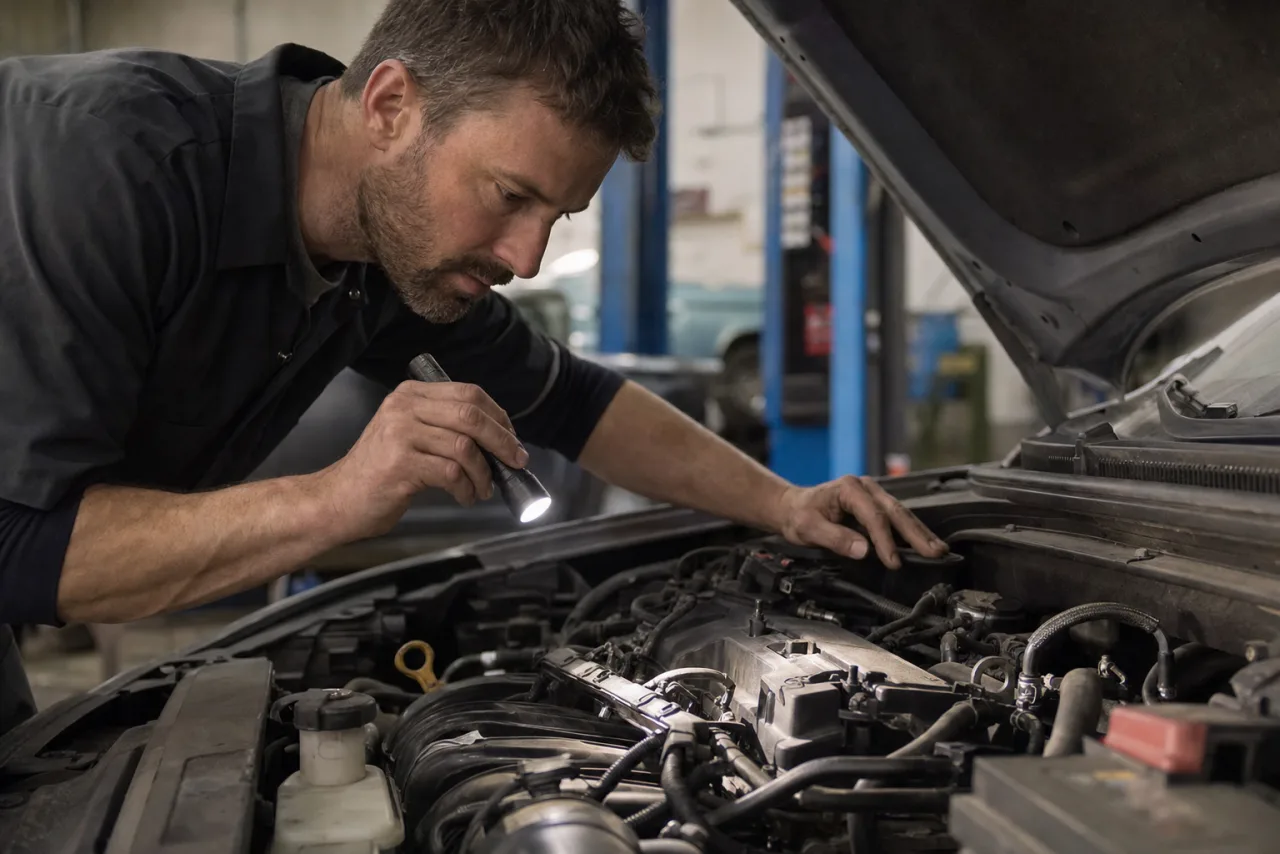
The transmission is the most expensive thing on a car most people never think about until it starts acting up, and by then the repair estimate can rival the price of the car itself. A slipping, shuddering, or clunking transmission is not a “drive it and see” problem the way a squeaky belt is. Left alone, a small transmission fault usually becomes a big one, because worn parts shed debris that wears more parts. The good news is that transmissions almost always warn you before they die, if you know what the warnings feel like. This guide covers the symptoms of transmission problems, what causes them, roughly what the repairs cost in the US, and how to catch trouble before you buy someone else’s failing gearbox.
The symptoms that mean trouble
Learn to recognize these, because catching them early is the difference between a $200 service and a $3,500 rebuild.
Slipping. You press the gas, the engine RPM climbs, but the car does not accelerate the way it should, as if the power is not fully connecting to the wheels. Or the car changes gear on its own at odd moments. Slipping is one of the clearest signs of internal wear or low or degraded fluid.
Shuddering or juddering. A vibration or shaking, often felt during acceleration or as the transmission shifts. On automatics it can feel like driving over rumble strips. On CVTs, a shudder during light acceleration is a classic early warning.
Harsh, delayed, or missed shifts. The transmission bangs into gear, hesitates for a second or two before engaging when you shift from park to drive, or refuses to change gear at all. A delay when you select reverse or drive is a common early symptom.
Whining, humming, or clunking noises. New sounds that change with speed or gear point at internal wear, bearings, or fluid problems.
Burning smell. A hot, acrid smell can mean the transmission fluid is overheating and breaking down, which accelerates internal damage.
Leaking fluid. Red or brown fluid on your parking spot. Automatic transmission fluid is often reddish; low fluid quickly leads to slipping and overheating.
Warning light or limp mode. A transmission fault can trigger a warning light, and in bad cases the car drops into “limp mode,” locking into one gear to protect itself.
What causes transmission problems
Old or low fluid. This is the number one cause of avoidable transmission failure. Transmission fluid lubricates, cools, and, in automatics, actually transmits power hydraulically. When it gets old, burnt, or low from a leak, everything downstream suffers. Many transmissions that “failed” were really just neglected fluid.
Worn clutches or bands (inside automatics). The friction materials wear over time and miles, causing slipping and harsh shifts.
A failing torque converter. In a traditional automatic, a bad torque converter causes shuddering, slipping, and sometimes a stall at stops.
Solenoid or valve body faults. These electro-hydraulic controls direct fluid to the right places. When they fail you get erratic or harsh shifts, often with a stored code.
Mechatronic or control unit failure (on dual-clutch transmissions). The electronic brain can fail and cause jerky shifting or limp mode.
CVT belt or pulley wear. On CVTs, the belt and pulleys wear and cause shuddering, slipping, and whining.
The type of transmission changes both the failure mode and the cost, which is why it pays to know whether you have a torque converter automatic, a CVT, or a dual-clutch. That breakdown is in automatic transmission types: which to avoid used.
What repairs cost
Ballpark figures for the US, because prices vary by vehicle and region:
- Fluid and filter service: $150 to $400. Cheap, and the single best thing you can do to prevent bigger bills. If a service catches a problem early, this may be all you need.
- Solenoid or sensor replacement: $150 to $600 depending on access.
- Valve body repair or replacement: $500 to $1,500.
- Torque converter replacement: roughly $600 to $1,500 for the part and labor.
- Clutch replacement on a manual: $1,000 to $2,500.
- Dual-clutch mechatronic unit: $1,500 to $3,500.
- Full rebuild or replacement automatic / CVT: $2,500 to $5,000, and higher on some vehicles.
The pattern is clear: catching a fluid or solenoid issue early costs hundreds, while ignoring it until the whole unit fails costs thousands.
Can you keep driving with transmission symptoms?
Short answer: not for long, and not hard. If the transmission is slipping or shuddering, every mile potentially adds wear and contaminates the fluid with debris. If it drops into limp mode or a warning light appears, get it diagnosed promptly. A car that slips badly or bangs into gear should be driven gently, straight to a shop, not commuted on for weeks. The exception is a simple, confirmed low-fluid situation you have topped up, and even then you want to find why it was low.
How to spot transmission trouble before you buy
This is where knowing the symptoms saves you thousands, because a failing transmission is one of the most expensive surprises in a used car.
- Drive it cold. Ask that the car not be warmed up before you arrive. Cold is when many transmission faults show worst.
- Feel the park-to-drive and park-to-reverse engagement. A long delay or a hard clunk is a warning.
- Test for slip by accelerating moderately and confirming speed rises with RPM.
- Feel for shudder during light and moderate acceleration.
- Check the fluid where accessible: it should be reasonably clean, not burnt-smelling or dark, and at the right level.
- Scan for stored codes. A transmission fault code can be present even with no light showing right now; an OBD2 scanner will find it.
- Ask for records. Proof of fluid changes is a very good sign; no maintenance history on a high-mileage automatic is a risk.
A pre-purchase inspection app like MotoPPI folds the OBD2 scan and a structured test-drive checklist into one process, so transmission symptoms get caught systematically rather than by luck. For the full routine see how to inspect a used car, and factor any findings into the running costs and your negotiation.
The bottom line
Transmissions rarely fail without warning. Slipping, shuddering, harsh shifts, odd noises, and burning smells are all the gearbox asking for help, usually starting with fresh fluid. Respond early and you spend hundreds; ignore it and you spend thousands. When buying used, treat any of these symptoms as a serious red flag and either walk away or price the risk in, because a bad transmission is one of the few faults that can quietly total an otherwise decent car.