An engine misfire is that stumble, shudder, or hesitation that makes your car feel like it briefly lost its rhythm, and it is one of the most common driveability complaints there is. A misfire means one or more cylinders failed to burn their fuel-air mixture properly, and while a single stray misfire is harmless, a steady or worsening one wastes fuel, kills power, and can destroy your catalytic converter if you ignore it. The causes range from a 15 dollar spark plug to a blown head gasket, so knowing how to think about a misfire saves you both money and guesswork.
Your engine fires each cylinder in a precise sequence, thousands of times a minute. A misfire is when one of those combustion events fails or is weak. The engine computer detects it (usually by sensing a tiny hiccup in crankshaft speed) and sets a fault code, often the very common P0300 (random misfire) or P0301 through P0308, where the last digit tells you which cylinder.
Symptoms of an engine misfire
- A rough or shaky idle, where the car feels like it is trembling at a stop.
- Hesitation or stumbling under acceleration, like the car briefly bogging down.
- A flashing check engine light, which specifically means an active misfire severe enough to damage the catalytic converter. A flashing light is a stop-driving-soon warning, not a someday one.
- Loss of power and a general sluggishness.
- Worse fuel economy, since unburned fuel is wasted fuel.
- A popping or sputtering sound from the exhaust, and sometimes a fuel smell.
- Vibration that gets worse the more cylinders are affected.
If your check engine light is flashing, ease off and get it looked at promptly, because raw fuel dumping into a hot catalytic converter can wreck a component that costs over 1,000 dollars to replace.
Common causes of a misfire
Misfires come down to a cylinder missing one of the three things it needs: spark, fuel, or compression. From cheapest and most common to most serious:
- Worn spark plugs or ignition coils. By far the most common cause. Old plugs or a failing coil pack simply stop lighting the mixture reliably. Our spark plugs and ignition coils symptoms guide covers this in depth, and it is where you should look first.
- Vacuum leaks that let unmetered air upset the mixture.
- Clogged or leaking fuel injectors, or low fuel pressure from a weak pump, which our failing fuel pump symptoms guide addresses.
- A bad oxygen sensor throwing the mixture off, covered in our bad oxygen sensor guide.
- Carbon buildup on valves in direct-injection engines.
- Loss of compression from worn valves, a burnt valve, or a blown head gasket, which is the serious, expensive end and is covered in our blown head gasket guide.
The trick to diagnosis is which cylinder and what conditions. A single cylinder misfire (P0302, say) points to that cylinder’s plug, coil, or injector. A random misfire across cylinders (P0300) points to something shared: fuel pressure, a vacuum leak, or the oxygen sensor.
Misfire repair cost
Because the causes vary so widely, so does the cost. Roughly:
- Spark plugs: often 100 to 300 dollars for a set installed, more on engines that are hard to reach.
- Ignition coils: commonly 100 to 300 dollars per coil installed, and many people replace plugs and coils together.
- Fuel injector: a few hundred dollars per injector, depending on the car.
- Vacuum leak repair: cheap if it is a hose, more if it is an intake gasket.
- Head gasket: the expensive one, frequently well over 1,000 to 2,500 dollars because of the labor involved.
The lesson is to diagnose before you spend. Throwing a full set of coils at a misfire that is actually a vacuum leak is a waste, and the reverse is worse. Read the code, note the cylinder, and start with the cheap, common causes.
How to diagnose a misfire
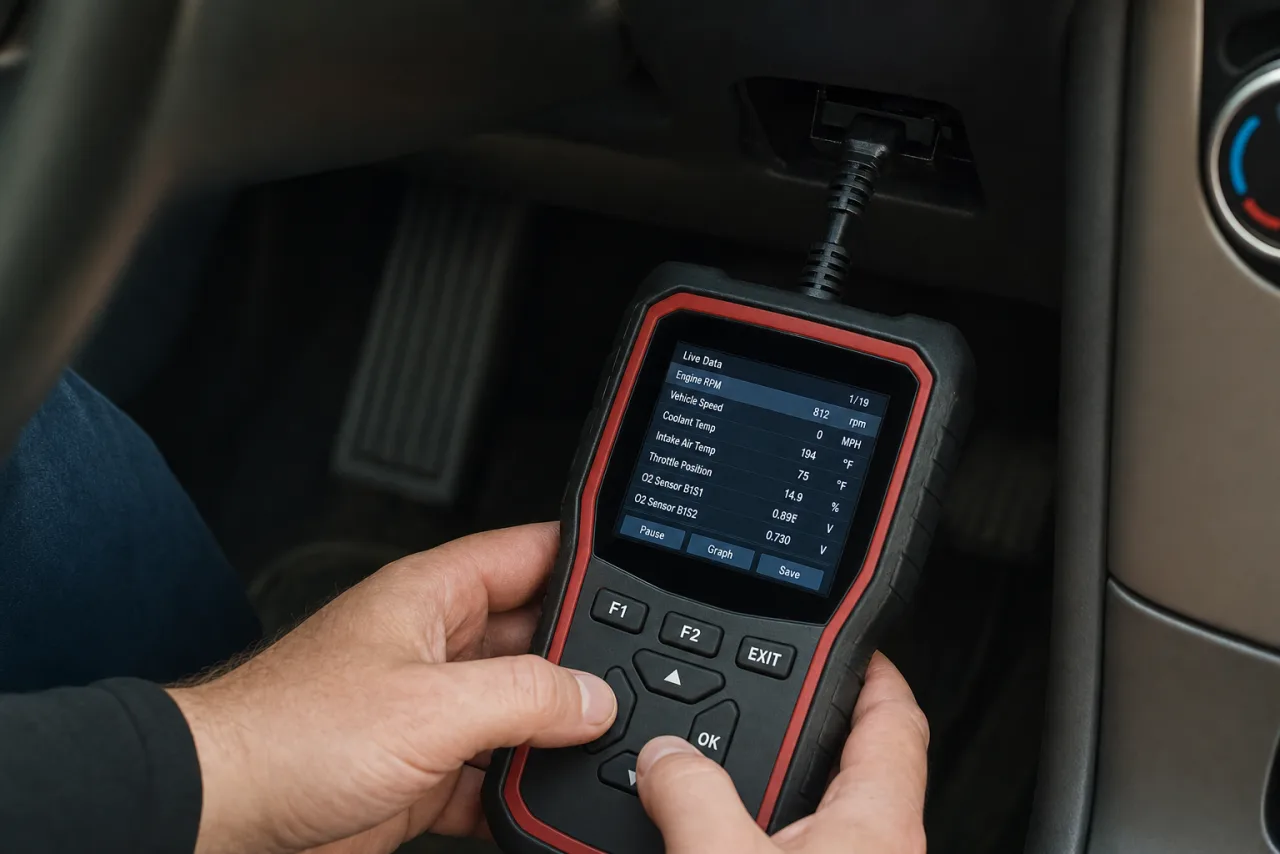
Start with an OBD2 scan to read the misfire code and see which cylinder. A cheap scanner tells you most of the story, and our OBD2 scanner guide shows how. From there, a common approach is to swap the coil (or plug) from the misfiring cylinder to a neighboring one and see if the misfire follows, which quickly isolates a bad coil. If it does not follow, the problem is more likely the injector or compression on that cylinder.
What a misfire means when buying a used car
A misfire on a car you are inspecting is a signal to slow down. On the cheap end it is a set of plugs, which is a minor negotiation. On the expensive end it is a head gasket or internal wear, which can be a dealbreaker. The seller may not even mention it, or may have cleared the code before you arrived.
This is exactly why scanning matters. When you inspect a car with MotoPPI, pulling the OBD codes reveals stored and pending misfire codes even if the dash was reset, and it tells you which cylinder. Pair that with a careful listen at a cold idle and a test drive under load, and you can tell a cheap plug job from a serious engine problem before you buy. Combine it with the wider how to inspect a used car routine.
The bottom line
A misfire is a cylinder failing to fire cleanly, and it announces itself with a rough idle, hesitation, and often a check engine light. Most misfires are cheap (plugs and coils), but a few are expensive (compression and head gasket), so the money-saving move is always to diagnose first. Never keep driving with a flashing check engine light, and when buying used, let an OBD scan tell you whether that little shudder is a 200 dollar fix or a reason to walk away.