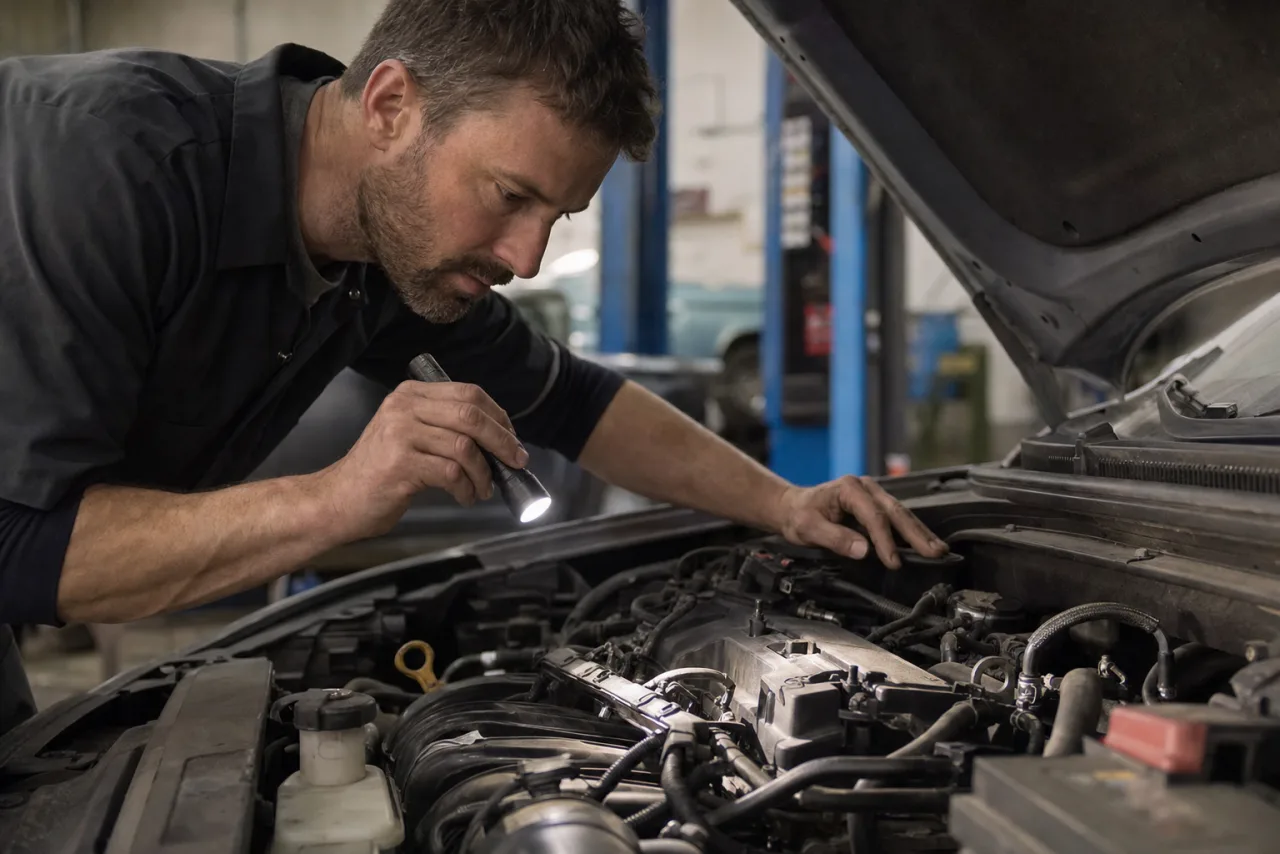
Few phrases empty a wallet faster than “blown head gasket.” It is the repair that turns a bargain used car into a mistake, because the part itself is cheap but the labor to reach it is brutal, and by the time the gasket has failed the overheating that caused it may have damaged other parts too. A blown head gasket can cost more to fix than a high-mileage car is worth, which is exactly why some sellers try to move a car quickly before the problem becomes undeniable. If you can recognize the symptoms of a blown head gasket, you can avoid buying one and diagnose your own before it gets worse. This guide covers what the head gasket does, the symptoms, repair costs in the US, how it is tested, and the risk when buying used.
What the head gasket does and why it fails
The head gasket sits between the engine block and the cylinder head, sealing three separate things at once: the combustion chambers (holding in high-pressure burning gases), the coolant passages, and the oil passages. It keeps these three from mixing. When it “blows,” that seal fails somewhere, and the results depend on where. Combustion gases can push into the cooling system, coolant can leak into the cylinders or the oil, or oil and coolant can mix.
The usual cause is heat. Overheating, from a low coolant level, a failed thermostat, a bad water pump, or a blocked radiator, warps the head or destroys the gasket. That is why head gasket problems and cooling problems go hand in hand; see cooling system problems and air locks. Once the gasket goes, the engine often overheats even more, creating a downward spiral.
The symptoms of a blown head gasket
No single symptom is proof, but a combination of these strongly points to a head gasket:
- Overheating, especially repeated overheating that comes back after you top up the coolant.
- Coolant disappearing with no visible external leak. The coolant is going somewhere internal: into the cylinders (burned as steam) or the oil.
- Thick white smoke from the exhaust, often sweet-smelling, because coolant is being burned. See what exhaust smoke colors mean.
- Milky, tan, foamy residue on the oil cap or dipstick, a sign coolant and oil have mixed. This looks like a chocolate milkshake and is a serious red flag.
- Bubbles in the coolant or overflow tank while the engine runs, from combustion gases leaking into the cooling system.
- A rough-running engine or misfire, if coolant is entering one or more cylinders.
- Loss of power and a check engine light, which an OBD2 scan can help interpret.
If you see white exhaust smoke, disappearing coolant, and a milkshake under the oil cap together, assume head gasket until proven otherwise.
What it costs to fix
This is where it hurts. The gasket itself might be $50 to $200, but replacing it means removing the cylinder head, which is a labor-heavy job. Typical costs in the US run $1,200 to $2,500, and more on complex engines, V6s and V8s where both heads or lots of surrounding parts must come off, or where the labor rate is high.
And the gasket is often not the whole story. If the engine overheated badly, the cylinder head may be warped and need machining, or cracked and need replacing. In the worst cases the overheating damages the block or the engine internals, and you are looking at a rebuild or a replacement engine at $4,000 to $8,000 or more. That range is why a blown head gasket on a cheap car frequently means the car is not worth fixing.
How it is tested
You do not have to guess. A mechanic confirms a head gasket with a few standard tests:
- A combustion leak (block) test, where a chemical in a tester changes color if combustion gases are present in the coolant. Cheap and reliable.
- A compression or leak-down test, which finds cylinders losing pressure through the gasket.
- A cooling system pressure test, to find where coolant is escaping.
- Simple visual checks: the oil cap and dipstick for milky residue, and the coolant for bubbles or oil.
These tests are inexpensive relative to the repair, so if a car shows symptoms, paying for a proper diagnosis before buying or before committing to a fix is money well spent.
The risk when buying a used car
A blown head gasket is one of the highest-stakes things to miss on a used car, because the repair can exceed the car’s value and because a seller with a failing gasket has strong incentive to sell fast and quiet. Watch for these when viewing:
- Insist on a stone-cold start. Feel the hood, it should be cold. A seller who “just warmed it up” may be hiding cold-start smoke and disguising a car that is hard to start or overheats quickly.
- Open the oil cap and pull the dipstick. Look for milky, tan residue. Clean oil is a good sign; a milkshake is a walk-away.
- Check the coolant tank for oil film, discoloration, or bubbles with the engine running.
- Watch the exhaust at cold start and under acceleration for thick white smoke.
- Watch the temperature gauge during the test drive. It should climb to normal and stay steady. A gauge that creeps up or a car that runs hot is a major flag.
- Scan for codes and check for evidence the computer was recently cleared to hide misfire or overheating faults.
A pre-purchase inspection app like MotoPPI prompts you through these exact checks, the cold start, the oil cap, the coolant, the exhaust, the temperature gauge, and the OBD2 scan, so a head gasket problem does not hide behind a warmed-up engine. For the broader routine see how to inspect a used car, and factor the risk into the cost of owning a used car.
The bottom line
A blown head gasket is the classic “cheap car, expensive repair” trap. The symptoms, overheating, disappearing coolant, white smoke, and a milkshake under the oil cap, are recognizable if you look for them, and cheap tests confirm it before you spend real money. On a used car, always start it stone cold, check the oil cap and coolant, and watch the temperature gauge. If several head gasket signs line up, the safest move is usually to walk away, because this is one repair that can quietly cost more than the whole car.