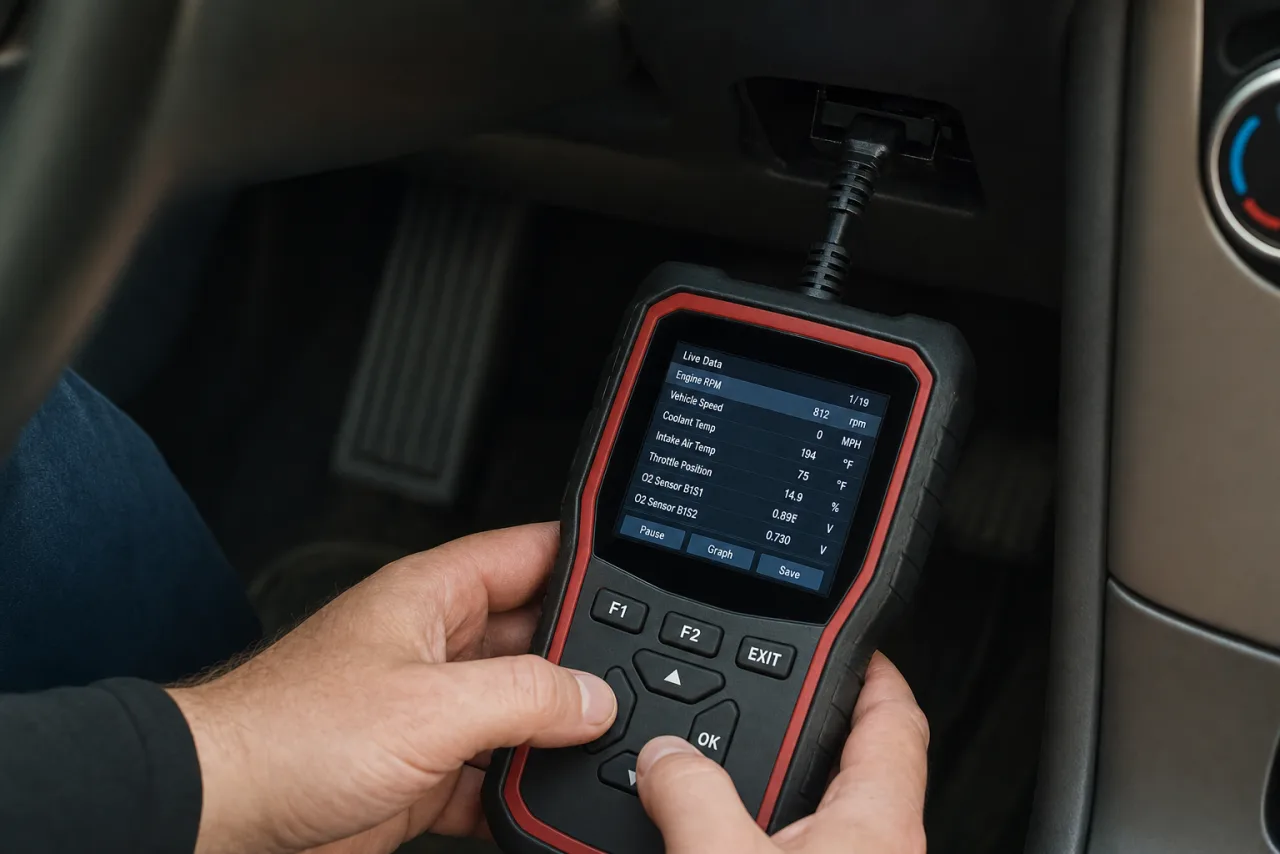
A bad oxygen sensor is one of the most common reasons a check engine light comes on, and it is also one of the sneakiest ways your car quietly wastes gas. The oxygen sensor (also called a lambda sensor) tells the engine computer how much unburned oxygen is left in the exhaust, and the computer uses that reading to fine-tune the air-fuel mixture dozens of times per second. When the sensor gets lazy or dies, the engine starts guessing, and it almost always guesses rich, meaning it burns more fuel than it needs.
The good news is that a failing oxygen sensor rarely leaves you stranded. The bad news is that if you ignore it, you can lose 10 to 15 percent of your fuel economy and, over time, cook your catalytic converter, which is a far more expensive repair. Here is how to spot a bad O2 sensor, what a replacement should cost, and what it means if you find one on a car you are about to buy.
What an oxygen sensor actually does
Modern cars have at least two oxygen sensors, and many have four. The upstream sensor sits before the catalytic converter and does the real work of adjusting the fuel mixture. The downstream sensor sits after the converter and mostly checks that the converter is doing its job. When people say “my O2 sensor is bad,” they usually mean the upstream one, because that is the one that hurts fuel economy and driveability.
A healthy sensor constantly swings its voltage up and down as the mixture cycles slightly rich and slightly lean. A worn sensor gets slow and sluggish, or it sticks at one value. The computer notices this and either sets a fault code or starts running on preset default values, which are never as efficient as live readings.
Symptoms of a bad oxygen sensor
- Check engine light, often with codes in the P0130 to P0167 range (sensor circuit or performance) or P0171/P0174 (system too lean).
- Worse gas mileage. This is the big one. A dragging MPG figure with no obvious cause is a classic O2 sensor sign.
- Rough idle or hesitation, especially when the mixture goes off.
- Failed emissions test, since a bad sensor throws off the readings the test relies on.
- Rotten-egg smell from the exhaust if the rich mixture starts damaging the catalytic converter.
- Sluggish acceleration or a slight surge at steady cruise.
None of these are subtle once you know what to look for, but they overlap with other problems, which is why you should never just throw a sensor at the car without reading the codes first. A cheap OBD2 scanner clears up most of the guesswork, and we cover how to use one in our OBD2 scanner guide.
The effect on your MPG
This is where a bad oxygen sensor really costs you. Because a failing upstream sensor usually pushes the engine into a richer mixture, you can lose roughly 10 to 15 percent of your fuel economy, and in bad cases more. If your car normally gets 30 MPG and you drop to 26, that adds up fast. At 12,000 miles a year and typical gas prices, a lazy sensor can quietly cost you a few hundred dollars a year in extra fuel, which is often more than the repair itself.
That math is why fixing a confirmed bad O2 sensor is almost always worth it. You are not just clearing a light, you are stopping a slow fuel leak from your wallet.
Oxygen sensor replacement cost
Oxygen sensors are one of the more affordable emissions repairs. The part itself runs roughly 30 to 100 dollars for most cars, with universal sensors on the cheap end and vehicle-specific ones higher. Labor is usually one hour or less if the sensor is easy to reach, so a typical shop bill lands around 150 to 350 dollars per sensor installed. If it is seized in place or buried under other components, labor can climb.
If you are handy, replacing an accessible sensor is a genuine DIY job. It needs an oxygen sensor socket and a bit of patience, and you can save the labor. Just make sure you replace it with the correct part number, because the wrong sensor can throw new codes.
Do not confuse it with a dying catalytic converter
Here is the trap: a bad upstream oxygen sensor that runs rich for too long can damage the catalytic converter, and a bad converter can also trigger downstream sensor codes. If you ignore a P0420 (catalyst efficiency) code and just keep clearing it, you may end up needing a converter, which can run 1,000 dollars or more. Sorting out which part is actually at fault is exactly the kind of thing a proper diagnosis pays for. A rough idle or wandering mixture can also point to other issues like spark plugs, and our guide on spark plugs and ignition coils covers those overlapping symptoms.
What a bad O2 sensor means when buying a used car
A single stored oxygen sensor code on a used car is not a dealbreaker, but it is a bargaining chip and a warning sign. Ask yourself two things. First, has the seller been clearing the code to hide it? A car that shows a check engine light the moment you plug in a scanner tells you more than the seller’s promises. Second, has the rich running already damaged the catalytic converter?
This is exactly where a pre-purchase inspection earns its keep. When you check a car with MotoPPI, the app walks you through pulling OBD codes on your phone, so you can see stored and pending faults for yourself instead of trusting a cleared dashboard. If you spot O2 sensor codes plus a catalyst code, you know to budget for more than just a sensor, and you can negotiate accordingly. For the bigger picture on what to look for, our how to inspect a used car walkthrough puts it in context.
A quick way to gauge the risk during a test drive: watch your fuel gauge behavior and note any hesitation. If the owner has fuel receipts, ask about MPG. A car mysteriously drinking gas is worth a closer look.
Quick FAQ
Can I drive with a bad oxygen sensor? Yes, short term. The car will run, but you will waste fuel and risk converter damage the longer you wait, so treat it as a soon-not-now repair.
How long do oxygen sensors last? Modern heated sensors typically last 60,000 to 100,000 miles, though contamination from oil or coolant leaks can kill them early.
Will a new sensor fix my MPG right away? If the sensor was the cause, yes, you should see fuel economy recover once the computer relearns. If MPG stays bad, the problem was somewhere else.
If your check engine light is on and your MPG has slipped, start with a code read before you spend anything. An oxygen sensor is a cheap, common fix, but only if it is actually the culprit. Confirm it first, replace the correct sensor, and you will get your fuel economy and your peace of mind back.