You go to top off your tank, the check engine light comes on a day later, and the code reader spits out something starting with P044. Welcome to the world of the EVAP system, the emissions hardware that manages fuel vapors, and the purge valve, one of its most common failure points. An EVAP purge valve problem rarely leaves you stranded, but it will light up your dash, fail an emissions test, and sometimes cause hard starting or a faint fuel smell, so it is worth understanding.
The good news: purge valve issues are usually cheap and straightforward to fix once you know what you are looking at. This guide covers EVAP purge valve symptoms, the P0440-series codes it triggers, replacement costs, and what to check when buying a used car with EVAP faults.
What the EVAP system and purge valve do
Gasoline evaporates, and those fuel vapors are both a pollutant and a fire hazard if released. The EVAP (Evaporative Emission Control) system captures the vapors from your fuel tank, stores them in a charcoal canister, and then feeds them into the engine to be burned rather than vented to the air. It is a sealed system, and the car’s computer periodically tests it for leaks.
The purge valve (also called the purge solenoid) is the gate that controls when those stored vapors flow from the canister into the engine’s intake. The computer opens it under the right conditions so the engine burns the vapors, then closes it. When the purge valve sticks open or shut, or leaks, the sealed system no longer behaves as expected and the computer flags a fault.
Symptoms of a bad purge valve
EVAP problems are often silent apart from the check engine light, but a failing purge valve can cause:
- A check engine light with an EVAP code, most commonly in the P0440 to P0455 range (P0441 for incorrect purge flow, P0443 for a purge valve circuit fault, P0455 for a large leak).
- A rough idle or stalling, if the valve sticks open and lets unmetered vapors into the engine, upsetting the air-fuel mixture, especially just after startup.
- Hard starting, particularly right after refueling, if the valve is stuck open.
- A faint fuel smell near the car, from vapors not being properly contained.
- A failed emissions test, since the EVAP monitor will not pass with an active fault.
- Slightly reduced fuel economy in some cases.
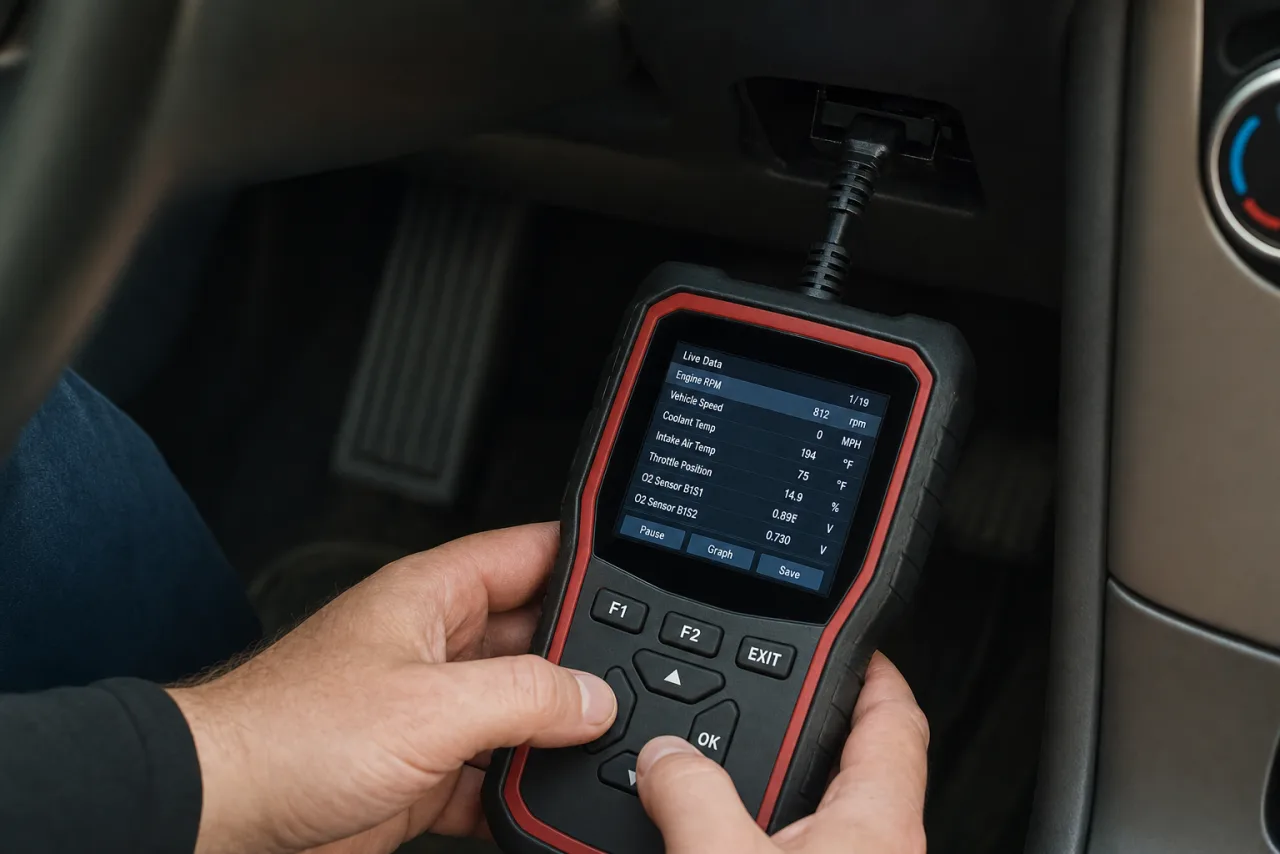
Many EVAP codes are actually caused by the simplest thing of all: a loose or bad gas cap. Before assuming the purge valve, tighten the gas cap, drive for a few days, and see if the light clears. If it does not, the purge valve, vent valve, or canister is the next suspect. Our guide on check engine light causes covers how to read these codes, and if you do not own a scanner yet, our OBD2 scanner guide explains what to look for.
Why the purge valve fails
Purge valves fail for a few common reasons:
- Sticking open or closed as the internal solenoid or seals wear.
- Contamination from charcoal dust if the canister breaks down and clogs the valve.
- Electrical faults in the solenoid circuit or connector.
- Age, since it is a small electromechanical part that cycles constantly.
The related vent valve on the other side of the canister can cause similar codes, so the exact code matters for pinpointing which part to replace. The P0440 family is really a group of EVAP codes, and reading the specific number saves you from replacing the wrong part.
Replacement cost
An EVAP purge valve is one of the cheaper emissions repairs. The part itself usually runs $20 to $80, and it is often easy to reach in the engine bay, so labor is minimal. Total replacement at a shop typically comes to $100 to $250. If the problem turns out to be the vent valve, the charcoal canister, or a cracked EVAP hose, the cost can climb, a canister replacement can run $200 to $600, but the purge valve itself is usually a quick, affordable fix. Because these codes are cheap to chase and easy to misdiagnose, confirm the exact code before buying parts.
What this means when buying a used car
An EVAP fault on a used car is usually minor, but it still matters:
- Any active check engine light will fail an emissions test, which you may need to register the car in your state. Even a cheap EVAP code can hold up registration.
- Scan for the specific code. A P0455 large-leak or a purge-flow code tells you whether you are looking at a gas cap, a purge valve, or a bigger canister job.
- Sniff for fuel smell and note any rough idle just after startup.
- Check the gas cap seals properly, since a worn cap is the cheapest possible cause.
The value of a proper scan is that it separates a two-dollar gas cap from a six-hundred-dollar canister before you agree on a price. The MotoPPI app reads EVAP and emissions codes right on your phone, shows you the exact P-code, and walks you through the rest of the inspection, so a check engine light does not become a mystery you overpay to solve. For the complete process, see how to inspect a used car.
An EVAP purge valve problem is rarely serious and usually cheap, but it will keep your check engine light on and can block an emissions pass. Start with the gas cap, read the exact code, and replace the right part, and you will clear the light without overspending.