The catalytic converter is a part most drivers never think about until it either clogs up and strangles the engine, or gets sawed off the underside of the car in a parking lot. A clogged catalytic converter can leave you with a car that has no power and a glowing check engine light, and replacing one is one of the pricier exhaust repairs you will face, often over a thousand dollars. It is also the single most stolen part on American roads, because of the precious metals inside it.
Understanding how the catalytic converter works, what makes it fail, and why thieves want it helps you spot trouble early and protect yourself. This guide covers clogged catalytic converter symptoms, replacement costs, the causes of failure, and the theft problem, plus what to check when buying a used car.
What a catalytic converter does
The catalytic converter is part of the exhaust system, mounted between the engine and the muffler. Inside is a ceramic honeycomb coated with precious metals (platinum, palladium, and rhodium) that act as catalysts. As exhaust gases pass through, chemical reactions convert harmful pollutants, carbon monoxide, unburned hydrocarbons, and nitrogen oxides, into less harmful carbon dioxide, water vapor, and nitrogen. It is emissions control hardware, and a car cannot legally pass an emissions test or run cleanly without a working one.
Those precious metals are why the part is expensive to buy and, unfortunately, valuable to steal.
Symptoms of a clogged catalytic converter
When the honeycomb inside gets clogged or breaks apart, exhaust cannot flow freely and the engine effectively has to breathe through a blocked pipe. The symptoms of a clogged catalytic converter include:
- Sluggish acceleration and loss of power, especially at higher speeds or under load, because the engine cannot exhale.
- A check engine light, frequently a catalyst efficiency code (P0420 or P0430 are the classic ones), which means the converter is no longer cleaning the exhaust well enough.
- Reduced fuel economy, as the restricted exhaust makes the engine work harder.
- A rotten-egg (sulfur) smell from the exhaust, a sign the converter is not processing the gases properly.
- Rattling from underneath, if the internal honeycomb has broken loose and is rattling around.
- Trouble starting or stalling in severe cases, when the blockage is bad enough to choke the engine.
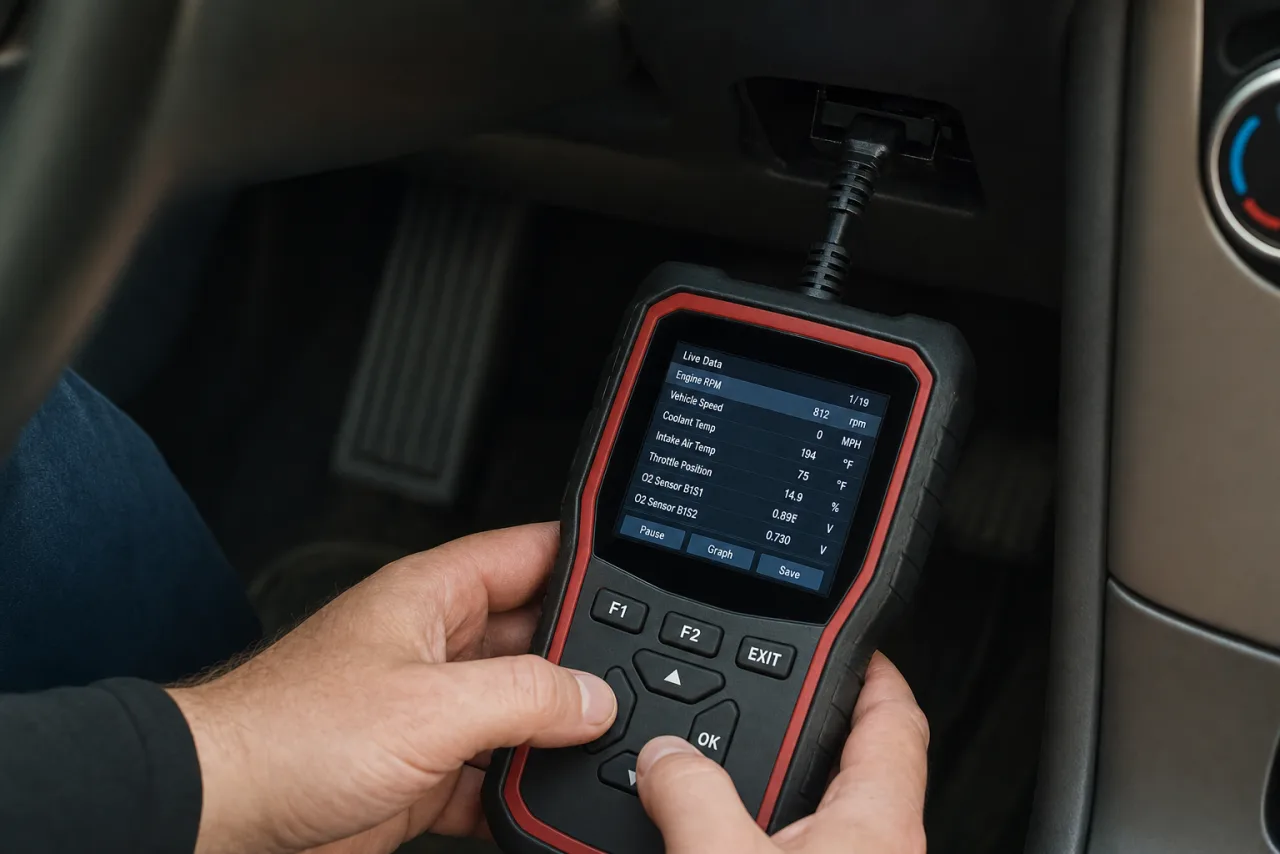
A P0420 code is one of the most common check engine light causes, and it does not always mean the converter itself is the root problem, sometimes a bad oxygen sensor or a misfire dumping fuel into the exhaust is what damaged or fooled it. Our guides on bad oxygen sensor symptoms and check engine light causes explain how to tell them apart before you spend big.
What causes a converter to clog or fail
A catalytic converter rarely fails on its own. It is usually the victim of another problem upstream:
- Engine misfires or a rich fuel mixture dumping unburned fuel into the exhaust, which overheats and melts the converter’s internals.
- Oil or coolant burning in the engine (from worn rings or a leaking head gasket) coating and poisoning the catalyst.
- A bad oxygen sensor feeding wrong data so the engine runs rich.
- Age and high mileage, as the catalyst simply wears out over 100,000-plus miles.
This is why a P0420 should prompt you to look upstream. Replacing the converter without fixing the misfire or oil burning that killed it just kills the new one too.
Replacement cost
Catalytic converters are expensive because of the precious metals inside. For most mainstream cars, a replacement runs roughly $900 to $2,500 installed, and on larger or higher-end vehicles it can be higher. Aftermarket converters are cheaper than factory ones but must meet emissions standards to be legal, and in some emissions-strict states you may be required to use a specific compliant part. Given the cost, always confirm the converter is truly the failed part, and fix whatever caused it, before replacing it.
Why catalytic converters get stolen
Catalytic converter theft has surged because of the value of the metals inside, which can be worth hundreds of dollars as scrap. Thieves slide under a parked car and cut the converter out with a battery-powered saw in a minute or two. Tall vehicles like trucks and SUVs are easier targets because there is more room underneath, and certain hybrids are hit hard because their converters contain more precious metal. You usually discover the theft the instant you start the car: without the converter, the exhaust is deafeningly loud.
Ways to reduce the risk include parking in a garage or well-lit area, having the converter etched or fitted with a protective shield or cage, and using cameras. A stolen converter is not just the replacement cost, it is also the downtime and the loud, illegal-to-drive car in the meantime.
What this means when buying a used car
When inspecting a used car, the catalytic converter is worth attention:
- Watch for a P0420 or P0430 code on an OBD scan, which points to a tired or damaged converter.
- Listen for excessive exhaust noise or rattling, which can indicate a broken or previously stolen-and-replaced converter.
- Check for a sulfur smell and sluggish acceleration on the test drive.
- Look underneath for signs of a cut-and-welded exhaust, which can mean a converter was stolen and cheaply replaced.
A quick OBD scan tells you a lot here. The MotoPPI app reads catalyst and emissions codes, shows you the live oxygen sensor data, and walks you through an underbody and exhaust check, so you do not buy a car facing a $1,500 converter bill. For the full inspection routine, see how to inspect a used car.
A clogged catalytic converter is expensive, but it is almost always a symptom of something else. Catch the underlying misfire, oxygen sensor, or oil-burning problem early, protect your converter from theft, and you avoid the worst of both the repair bill and the parking-lot surprise.