Traction control and stability control are two of the most important safety systems in your car, and most drivers only notice them when a light flickers on the dash or when the car quietly saves them from a slide they never fully felt. These systems, often grouped under the names ESC (electronic stability control) or ESP (electronic stability program), work invisibly to keep the car pointed where you steer it. When the warning light comes on and stays on, though, something is wrong, and it may mean you are driving without that safety net. This guide explains what traction control and stability control do, the difference between them, what the ESP or ESC light means, and what to check when buying a used car.
Traction control vs stability control
They are related but not the same, and they build on each other.
Traction control (TCS) stops your driven wheels from spinning uselessly when you accelerate. If a wheel starts to break loose on a slippery patch, the system either brakes that wheel or cuts engine power until it grips again. It is about forward traction: getting the car moving without wheelspin on ice, wet roads, or loose surfaces.
Stability control (ESC or ESP) is broader and, arguably, the bigger safety win. It compares where you are steering with where the car is actually going, using sensors for steering angle, yaw (rotation), wheel speed, and lateral force. If the car starts to understeer (plowing straight ahead) or oversteer (the rear sliding out), stability control brakes individual wheels to pull the car back into line. It can prevent a spin or a slide from becoming a crash, and it is credited with a large drop in single-vehicle fatalities. Electronic stability control has been mandatory on new passenger vehicles in the US since the 2012 model year.
Both systems share hardware with the anti-lock brakes (ABS), because they all rely on the same wheel-speed sensors and the ABS pump to brake individual wheels. That shared hardware is why a fault in one can trigger warning lights for the others.
What the ESP/ESC warning light means
There are two different situations, and telling them apart matters.
The light flashes briefly while driving. That is the system working, cutting power or braking a wheel because you hit a slippery patch. That is normal and means it is doing its job. Ease off and the flashing stops.
The light stays on solid. That means the system has detected a fault and switched itself off. You still have normal brakes and steering, but you are driving without the stability safety net. Common causes include a failed wheel-speed sensor, a bad steering-angle sensor, a problem with the ABS module, or sometimes something as simple as a mismatched or wrong-size tire confusing the wheel-speed readings. It can also come on together with the ABS light, since they share hardware.
If you also see a “traction control off” message, check whether someone simply pressed the button to disable it, which is sometimes useful when stuck in snow or mud. If the light is a mystery, the dashboard warning lights guide helps you tell serious from harmless, and understanding the alphabet soup of these systems is easier with the car acronyms explained reference.
How it is diagnosed
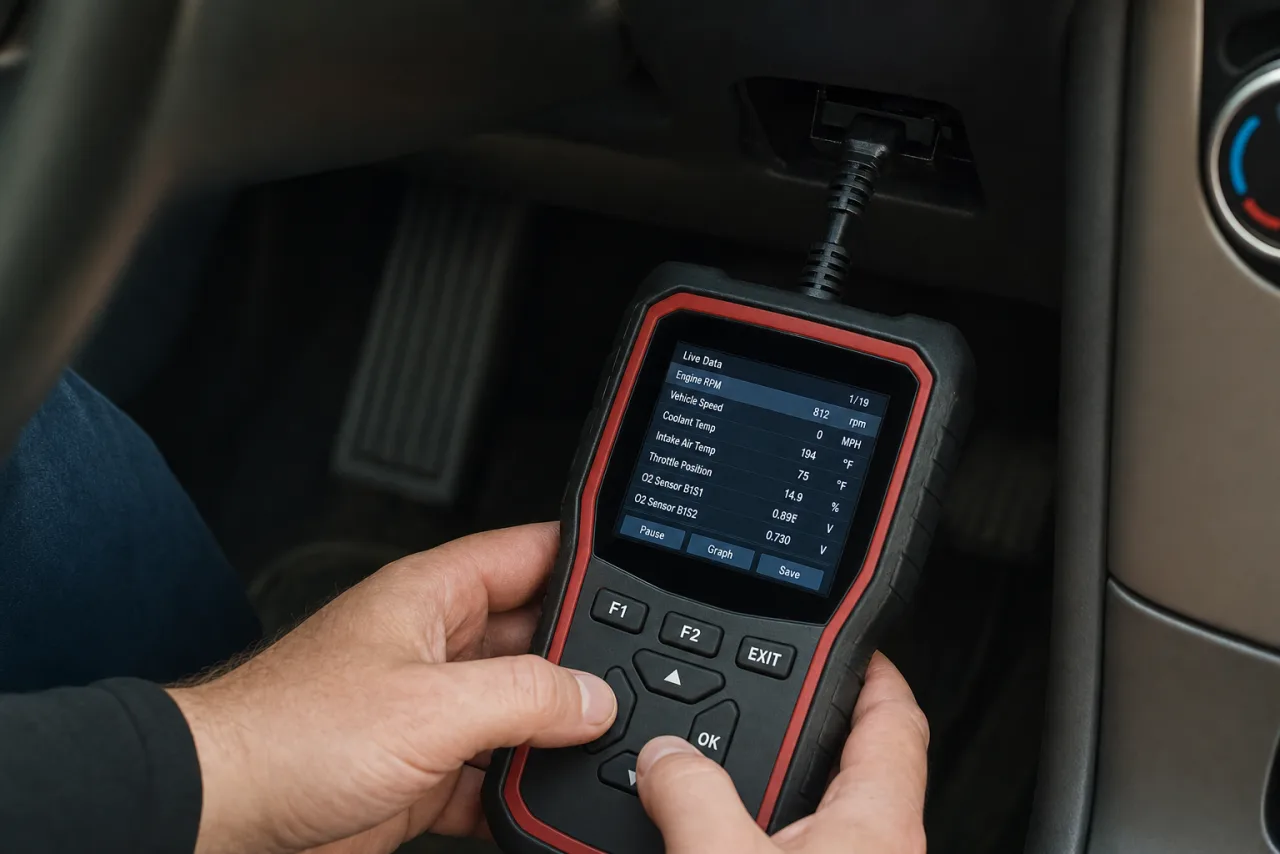
A stability control fault stores a code, and these are often chassis codes (C-codes) rather than the emissions codes you see most. A capable OBD2 scanner that can read ABS and chassis modules will point at the failed sensor or module. Basic code readers sometimes only read engine codes, so this is one reason to own a scanner that reaches the other systems, a point covered in the scanner guide.
The most common single culprit is a wheel-speed sensor, which is a relatively affordable part. A steering-angle sensor or the ABS module itself is pricier. Because the systems are safety-critical, this is not a light to ignore for long.
What it means when buying a used car
A steady ESP or ESC light on a car for sale is a real flag. At best it is a cheap wheel-speed sensor; at worst it is an ABS module problem that costs real money, and either way the car is currently without a key safety system. Some sellers hope you will not notice or will assume it is trivial.
Check that all the warning lights illuminate at key-on and then go out, the normal bulb-check sequence. A light that never comes on at all can mean someone disabled it to hide a fault. Scan for ABS and chassis codes before buying, not just engine codes, and fold this into your full used-car inspection. Mismatched tire sizes can trigger these faults too, so confirm the tires match around the car.
The MotoPPI app reads stored fault codes across systems and walks you through checking the warning lights, so a car quietly driving around with its stability control switched off does not become your problem after the sale.
The bottom line
Traction control keeps your drive wheels from spinning; stability control keeps the whole car from sliding or spinning out, and it is one of the biggest safety advances of the last few decades. A brief flash of the light means the system is working. A steady light means it has faulted and turned off, leaving you without that protection, most often because of a wheel-speed sensor. When buying used, insist that the lights do their normal bulb check and scan the chassis codes, because a dark or stuck ESC light is a safety system you are not getting.