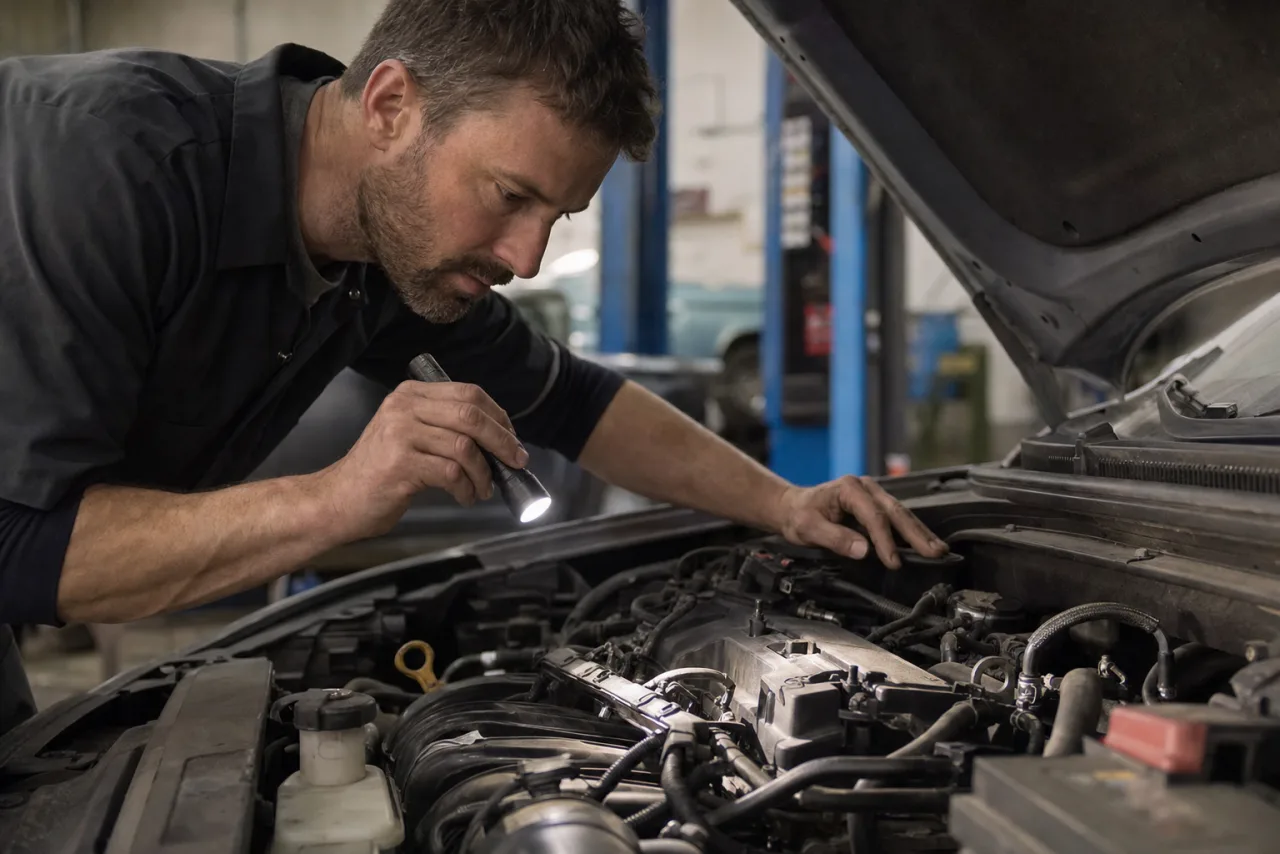
The timing belt (or chain) is the single cheapest part that can total your engine. It keeps the top of the engine spinning in sync with the bottom, and on most modern engines if it fails, the pistons and valves collide and you are looking at a rebuilt or replaced engine. That is why “when was the timing belt done?” is one of the most important questions you can ask about a used car, and why ignoring the interval on your own car is a genuinely dangerous gamble.
Belt or chain, the job of keeping things in time is the same, but the maintenance story is very different. Here is what you actually need to know.
What the timing belt/chain does
Your engine has a crankshaft at the bottom (driven by the pistons) and one or two camshafts at the top (which open and close the valves). These have to spin in a precise relationship so the valves open at exactly the right moment. The timing belt or chain is what links them.
- A timing belt is a reinforced rubber toothed belt. It is quiet and cheap to make, but it wears and must be replaced on a schedule.
- A timing chain is a metal chain, like a bicycle chain, running in engine oil. It is designed to last much longer, often the life of the engine, but it can stretch and its tensioner and guides can wear, especially if oil changes are neglected.
The scary term is interference engine. In an interference design (most modern engines), the valves and pistons occupy the same space at different moments. If the belt or chain slips or snaps, that timing is lost, the valves stay open when a piston comes up, and they smash together. The result is bent valves at best, and a wrecked cylinder head or block at worst. A non-interference engine has enough clearance that a broken belt just leaves you stranded without internal damage, but these are increasingly rare.
Timing belt: when to replace and the cost
Replacement intervals vary by manufacturer but generally fall in the range of 60,000 to 105,000 miles, or every 7 to 10 years, whichever comes first. The time limit matters even for low-mileage cars, because rubber ages and cracks regardless of use. Check the specific interval for your make, model, and engine, do not guess.
- Timing belt service: $500 to $1,200 on most cars. Always replace the water pump, tensioner, and idler pulleys at the same time, since they are behind the belt and it is cheap to do them together. That combined kit is what most of the labor pays for.
- A snapped belt on an interference engine: $2,000 to $5,000+ for a cylinder head rebuild or engine replacement. On some engines it is simply a write-off.
The math is brutal and simple: a $700 preventive job versus a multi-thousand-dollar engine failure. If you buy a car near or past its belt interval with no record of replacement, budget to do it immediately.
Timing chain: symptoms and cost
Chains are meant to last, but they are not immortal, and some engines are known for early chain stretch. Watch for:
- A rattling or whining noise from the front of the engine, worst at cold start for the first few seconds. This is the classic sign of a stretched chain and worn tensioner.
- A check engine light with camshaft/crankshaft correlation codes like P0016 or P0017.
- Rough running or reduced performance as timing drifts.
- Metal in the oil in severe cases.
Chain replacement is more labor-intensive than a belt because it is deeper in the engine.
- Timing chain replacement: $1,000 to $3,000+ including tensioner and guides.
The best prevention for a chain is simple: change the oil on time with the correct grade. Chains run in oil and stretch faster when the oil is old, dirty, or the wrong spec. See our engine oil guide.
What it means when buying a used car
This is where a little diligence saves you thousands.
- First, find out whether the car uses a belt or a chain, and if a belt, what the interval is. A quick search by engine code tells you.
- For a belt car, get proof of replacement: a receipt with mileage and date. “I think the previous owner did it” is not proof. If there is no record and the car is near or past the interval, assume it needs doing and price that in.
- For a chain car, listen at cold start for a rattle in the first seconds before oil pressure builds. Bring the test drive checklist and start the car yourself, cold.
- Plug in an OBD2 scanner and check for camshaft correlation codes. Our OBD2 scanner guide explains it.
- Factor mileage into the risk. A high-mileage chain engine with an unknown oil history is a bigger gamble; see how many miles is too many.
A pre-purchase inspection app like MotoPPI helps here by combining the cold-start listen, the OBD2 read, and a prompt to verify the service history, so a missing belt record or a rattly chain doesn’t slip past you.
The bottom line
Belt or chain, timing is not something to let ride. On a belt car you own, treat the mileage-or-years interval as a hard deadline, because the alternative is a ruined engine. On a chain car, protect it with on-time oil changes and take a cold-start rattle seriously. And when buying used, the difference between a car with a documented fresh belt and one with an unknown belt can be a thousand dollars off the price, or a very good reason to keep looking.