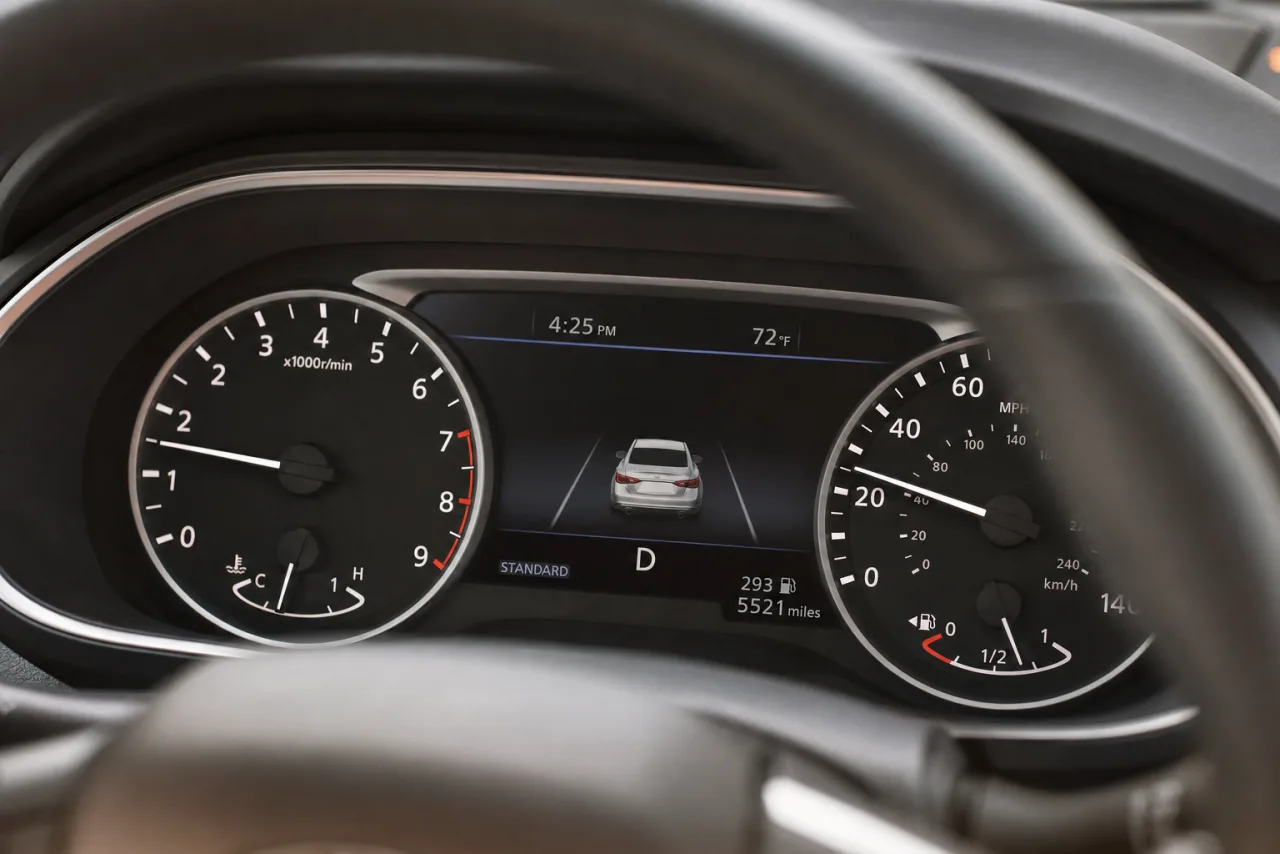
Walk any used lot and you’ll hear the same question from every buyer: “How many miles is too many?” It’s the wrong question, or at least an incomplete one. A 130,000-mile highway commuter that got its oil changed on schedule will almost always outlast an 80,000-mile car that spent five years doing 2-mile grocery runs and never got warm.
Mileage matters. Of course it does. But the raw number on the odometer is the least useful figure in the whole equation. What actually predicts how much life is left is how those miles were put on - and whether the number is even real.
Here’s how to read mileage like someone who’s done this before, not like someone staring at a five-digit display and guessing.
The number that beats the total: miles per year
Forget the odometer for a second and do one piece of arithmetic. Take the mileage, divide it by the car’s age. The US average is roughly 12,000 to 15,000 miles per year (about 19,000 - 24,000 km for readers used to metric). That’s your baseline.
- A 2018 car with 90,000 miles is dead average. Nothing to see here.
- A 2018 car with 45,000 miles did about 6,500 a year. Low use - which sounds great and sometimes isn’t (more on that below).
- A 2018 car with 160,000 miles did around 23,000 a year. High, but if those are interstate miles, this can be the healthiest car on the lot.
Highway miles are gentle miles. Steady cruising means the engine runs at operating temperature, oil circulates properly, the transmission stays in top gear, and the brakes barely get used. City miles are the opposite: constant stop-and-go, short trips that never burn off moisture, hard braking, heat-soak in traffic. A city mile can be worth two or three highway miles in terms of wear.
So when you evaluate mileage, you’re really asking three things: How many per year? What kind of miles? And is the maintenance history consistent with the total?
When low mileage is actually a red flag
This is the part dealers won’t volunteer. A car that’s been driven very little can be in worse shape than one that’s been driven a lot.
Engines and drivetrains are designed to run. When a car sits for weeks between short trips, several bad things happen:
- Moisture never burns off. Oil that doesn’t reach full temperature accumulates water and fuel dilution. Over years, that means sludge and internal corrosion.
- Rubber and seals dry out and crack. Gaskets, hoses, and tires age by the calendar, not just by use. Tires older than six years are hardened and unsafe regardless of tread depth - check the DOT date code on the sidewall.
- Batteries, brakes, and fuel systems suffer from sitting. Rotors rust, calipers seize, fuel goes stale, the 12V battery dies early.
- Modern hybrids and EVs dislike sitting too. A high-voltage battery left at a low state of charge for months isn’t doing itself any favors - one more reason choosing the right powertrain on the used market depends on how the previous owner actually used the thing.
A “30,000-mile garage queen” from 2013 has done barely 2,500 miles a year. That’s not a well-preserved car - that’s a car whose fluids have been sitting still for a decade. I’d take a well-serviced 120,000-mile version over that any day.
High-mileage cars that are perfectly fine
Some cars shrug off big numbers. If you’re shopping at 150,000-plus miles, the platform matters enormously.
- Naturally-aspirated Toyota and Honda four-cylinders (Camry, Corolla, Accord, CR-V) routinely pass 200,000 miles with basic care.
- Large truck and SUV V8s and diesels - F-150, Silverado, Tahoe, Ram - are built for a quarter-million miles when maintained.
- Highway-driven anything ages more slowly than the odometer suggests.
What turns a high-mileage car from a bargain into a money pit isn’t the miles - it’s deferred maintenance and neglected wear items. At 100,000-plus miles you should expect, and budget for, the big-ticket service items: timing belt (if the engine uses one), water pump, spark plugs, transmission fluid, suspension bushings. Factor those into your offer. Our breakdown of what a used car really costs to own covers where those dollars go.
The rule: it’s not the number, it’s the maintenance behind the number. A shoebox full of service receipts is worth more than a low reading on the dash.
Now the important part: is the mileage even real?
Everything above assumes the odometer tells the truth. In the US, the NHTSA estimates more than 450,000 vehicles are sold each year with false odometer readings, costing buyers over a billion dollars. Digital dashboards made rollback easier, not harder - a scammer with a laptop can knock 60,000 miles off in the parking lot in fifteen minutes.
A rolled-back odometer is almost never done perfectly, though. There’s always a trail. Here’s how to close the gap.
1. Cross-check the vehicle history report
Every safety inspection, oil change at a chain, service visit, and title transfer can log an odometer reading. NMVTIS (the National Motor Vehicle Title Information System), Carfax, and AutoCheck aggregate these. What you’re looking for is simple: does the mileage rise consistently over time? If a report shows 140,000 miles in 2024 and the dash reads 95,000 today, the car didn’t drive backward. That’s a rollback in black and white. Our guide to reading a vehicle history report walks through exactly which lines to trust.
2. Match the wear to the claim
Scammers reset the display; they rarely reupholster the interior. The parts your body touches wear at a predictable rate:
- Steering wheel worn shiny at 10 and 2 o’clock = 150,000-plus miles, no matter what the dash says.
- Driver’s seat bolster collapsed or cracked, the side you slide across getting in.
- Pedal rubbers worn to the metal - or suspiciously brand new on a “low-mileage” car (why replace them?).
- Shifter, buttons, door handles with the labels rubbed off.
If the interior looks like 200,000 miles and the odometer claims 70,000, believe the interior. There’s a full field guide in 9 ways to spot a rolled-back odometer.
3. Read the computer, not just the dash
On many modern cars the mileage is stored in more than one module - the instrument cluster, the ECU, sometimes the keys. Amateurs only reset the cluster. A cheap OBD2 scanner (or a mechanic) can pull the ECU’s stored value and compare. Cluster says 90k, ECU says 190k? Case closed.
4. Confirm it on the test drive
Take it out and put miles under it. A genuinely low-mileage car feels tight - crisp shifts, quiet suspension, no rattles over bumps. A “50,000-mile” car that clunks over every seam and wanders on the highway is lying to you. Our test-drive checklist covers what to feel for. MotoPPI walks you through both the history pull and the wear inspection on your phone, and it flags an illogical jump in odometer readings automatically - the exact thing that takes a human twenty minutes of cross-referencing.
So - how many miles is too many?
There’s no magic ceiling. A number to work with rather than fear:
- Under 100,000 miles: most of the drivetrain’s design life remains. Focus on how it was driven and whether the reading is real.
- 100,000 - 150,000 miles: the sweet spot for value. Prices drop hard here while a well-maintained car has plenty left. Budget for major service items.
- 150,000 - 200,000 miles: fine on the right platform (Toyota, Honda, full-size trucks) with documented maintenance. Negotiate hard.
- 200,000-plus miles: only with a spotless history and a rock-solid engine - and priced accordingly.
The real answer: too many miles is whatever number the maintenance and the seller’s honesty can’t support. Once you know the miles are real and the receipts back them up, mileage becomes just another data point - and a lever. Every worn item you find is a dollar figure you bring to the table, which is exactly the kind of ammunition our guide to negotiating a used-car price is built around.
Buy the maintenance history. The odometer is just the headline.