Of all the lights on your dashboard, the red oil pressure warning light is the one that can turn a good day into a $6,000 day faster than any other. It looks like a little oil can, sometimes with a drip, and when it glows red while you are driving it is not a suggestion. It means the oil pump is no longer pushing oil through your engine at the pressure it needs, and an engine without oil pressure can grind its own bearings to metal in a matter of minutes. This is the single most time-sensitive warning most drivers will ever see, and the difference between reacting correctly and “I’ll just get home first” is often the difference between a cheap sensor and a scrapped engine.
So before anything else, here is what to do the moment that light comes on and stays on.
What to do in the first 60 seconds
- Pull over safely and shut the engine off. Do not wait for a better spot a few miles ahead. Signal, get out of traffic, and turn the key off. Every minute of running with no oil pressure does real damage.
- Do not keep driving to “get home.” This is the mistake that seizes engines. A tow costs $100 to $200. A new engine costs $4,000 to $8,000 or more.
- Wait a few minutes, then check the oil level with the dipstick. Park on level ground, let it settle, pull the dipstick, wipe it, reinsert, and read it. If the oil is below the low mark or the dipstick comes out nearly dry, that is very likely your cause.
- If you have oil, top it up to the full mark and see if the light goes out when you restart. If it does, you can drive gently to a shop while watching the gauge. If the light stays on with correct oil level, do not drive. Call for a tow.
The rule is simple: red oil light plus engine noise or a stayed-on light equals stop. You cannot damage anything by shutting the engine off and calling a tow, but you can destroy it by pressing on.
Low oil light vs oil pressure light: not the same thing
Some cars have two separate warnings and people confuse them, which matters because one is far more urgent than the other.
- A low oil level reminder (often amber, sometimes with the word “OIL” or “check oil”) means the engine is getting low and you should add oil soon. Not an emergency by itself.
- The red oil pressure light means pressure has actually dropped, regardless of level. This is the emergency. It can come on even with plenty of oil in the sump if the pump, sensor, or oil passages have a problem.
If you are not sure which one your car showed, treat it as the pressure warning and stop. It is the safer assumption.
Common causes, from cheap to catastrophic
Not every oil pressure light means disaster. Here are the usual culprits, roughly in order from least to most expensive.
Low oil level. The most common and most fixable cause. Oil gets consumed or leaks out over time, and if you have skipped checking it, the level can drop far enough to lose pressure, especially in corners. Topping up may solve it entirely. This is why checking oil monthly matters; see engine oil symptoms, grades and intervals.
A failed oil pressure sensor or sending unit. Sometimes the pressure is actually fine and the sensor is lying. This is a happy outcome: the part is $30 to $80 and labor is modest, often $100 to $250 total. But you cannot assume it is “just the sensor” without checking real pressure with a mechanical gauge, because betting wrong here is how engines die.
Wrong or degraded oil. Oil that is too thin, badly overdue for a change, or diluted with fuel loses its ability to hold pressure, especially when hot. If you are way past your service interval, this can contribute.
A worn oil pump. The pump that circulates oil can wear out, particularly on high-mileage engines, and stop generating adequate pressure. Replacement is a bigger job, often $300 to $1,000 depending on how buried the pump is.
Worn engine bearings. As the crankshaft bearings wear, the clearances open up and oil pressure falls, especially at idle when the engine is hot. This often comes with a deep knocking noise. At this point you are looking at major engine work or a replacement engine. This is the outcome you are trying to avoid by stopping early.
A clogged oil filter or blocked passages. Sludge from neglected oil changes can restrict flow. Another reason regular oil changes are cheap insurance.
How to tell the sensor from the real thing
Here is the honest answer: you often cannot, not with certainty, from the driver’s seat. But there are clues. If the light comes on and the engine sounds completely normal and quiet, a sensor fault is more likely. If the light is paired with a ticking, tapping, or deep knocking sound, assume the pressure loss is real and stop immediately, because those noises are the sound of metal parts running dry.
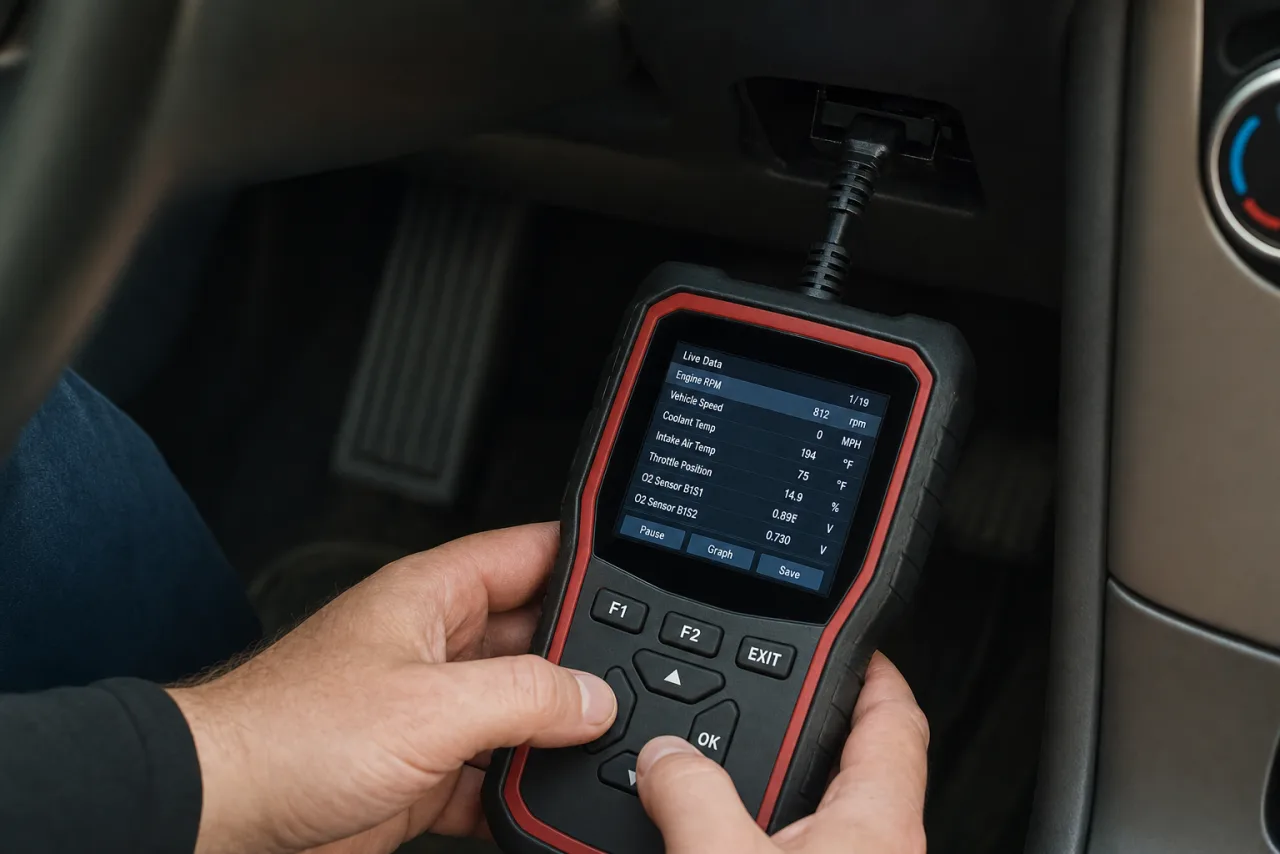
A mechanic confirms it by fitting a mechanical oil pressure gauge and comparing the real reading to spec. That test is cheap, often under $100, and it settles the “is it just the sensor” question before you spend anything bigger. A basic OBD2 scanner can also read a stored pressure-related code and, on many cars, show live oil pressure data; our OBD2 scanner guide covers which tools do that.
What it means when buying a used car
An oil pressure warning history is one of the most serious things you can find on a used car, because it can indicate an engine that was run low on oil or is worn out internally. The trouble is that sellers know this light scares buyers, so it is one they may try to hide.
Watch for the startup bulb check. When you turn the key to “on” before cranking, the oil pressure light should illuminate briefly, then go out once the engine runs. If it never lights at all during that check, someone may have disabled it. During the test drive, listen at cold start and again at a hot idle for any ticking or knocking, which points to bearing or oil-supply wear. A car that idles quietly cold but taps when hot is waving a flag. And plug in an OBD2 scanner to check for stored pressure or engine codes and for cleared readiness monitors that suggest a recent reset.
This kind of layered check, startup lights, cold and hot idle sound, and an OBD2 scan, is exactly what a pre-purchase inspection is for. A tool like MotoPPI walks you through each step so an engine that was starved of oil does not become your problem. The bigger picture is in how to inspect a used car.
The bottom line
The oil pressure warning light rewards fast, boring decisions. Pull over, shut it off, check the oil, and get it towed if the light will not clear. It might turn out to be a $60 sensor, and you will feel silly for stopping. That is the best possible outcome. The alternative, pressing on to save 20 minutes, is how a routine warning becomes a five-figure repair. When this specific light is red, treat time as the enemy, because for your engine it genuinely is.