Few things ruin a morning like turning the key and getting nothing, or a click, or a whir that never catches. The good news is that a car that won’t start is usually telling you exactly what is wrong, if you know how to listen. The three usual suspects are the battery, the starter, and the immobilizer/security system, and each one has a distinct set of symptoms. Diagnosing correctly can be the difference between a $15 fix and a $500 one, and it can save you from replacing a perfectly good part.
Let’s walk through it the way a mechanic would: listen to what happens when you turn the key, then narrow it down.
First, what happens when you turn the key?
Pay close attention to the sounds and lights. They point straight at the culprit.
- Nothing at all. No lights, no click, dead dash. Almost always the battery (or a connection to it). See the battery section below.
- A single loud click, but the engine doesn’t turn. Often a dead battery under load, or a failing starter solenoid.
- Rapid clicking (click-click-click). The classic sound of a battery too weak to spin the starter. The solenoid is chattering because voltage collapses.
- The engine cranks (rurr-rurr) but won’t fire. The battery and starter are fine. The problem is fuel, spark, or the immobilizer refusing to enable the engine.
- Dash lights work, but turning the key does nothing and you hear no crank. Could be the starter, the ignition switch, a neutral safety switch (be sure you are in Park), or the immobilizer.
- A key/security light flashing on the dash. Points at the immobilizer.
The battery
The battery is the most common cause by far, and the cheapest to fix. Symptoms include no or dim dash lights, slow lazy cranking, rapid clicking, and trouble that is worse in cold weather. A battery that is 4 to 6 years old is a prime suspect on its own.
Quick checks: try the headlights (very dim or dead confirms low battery), and if you have a multimeter, a healthy resting battery reads about 12.4 to 12.6 volts; below 12.2 it is low, and it should hold above roughly 9.6 volts while cranking. A jump start that gets the car going, followed by normal running, all but confirms the battery.
- New battery: $120 to $300 fitted, more for AGM.
- Corroded or loose terminals can mimic a dead battery. Cleaning them is nearly free and worth checking first.
For everything on choosing and testing a battery, see our car battery guide.
The starter motor
If the battery is healthy (good voltage, bright lights) but you get a single click or nothing when cranking, the starter motor or its solenoid is the likely culprit. Symptoms: a loud single click with no crank, intermittent starting that sometimes works if you try again, a grinding noise, or the classic trick of the car starting after you tap the starter with a tool (a sign of worn brushes or a dead spot).
Heat can also expose a failing starter: the car starts fine cold but refuses when hot after a drive.
- Starter motor replacement: $300 to $650 on most cars, more if it is buried under the intake.
- Sometimes only the solenoid or contacts need doing, which is cheaper if the shop rebuilds rather than replaces.
Before condemning the starter, rule out the battery and connections, because a weak battery causes the same single-click symptom and it is a shame to replace a $400 starter when a $150 battery was the problem.
The immobilizer / security system
If the engine cranks normally but won’t fire, or a security light is flashing, suspect the immobilizer. This anti-theft system checks a chip in your key before it lets the engine run. Common causes:
- A dead key-fob battery or a worn transponder chip, so the car doesn’t recognize the key.
- Using a spare key that was never properly programmed.
- A fault in the immobilizer receiver or wiring.
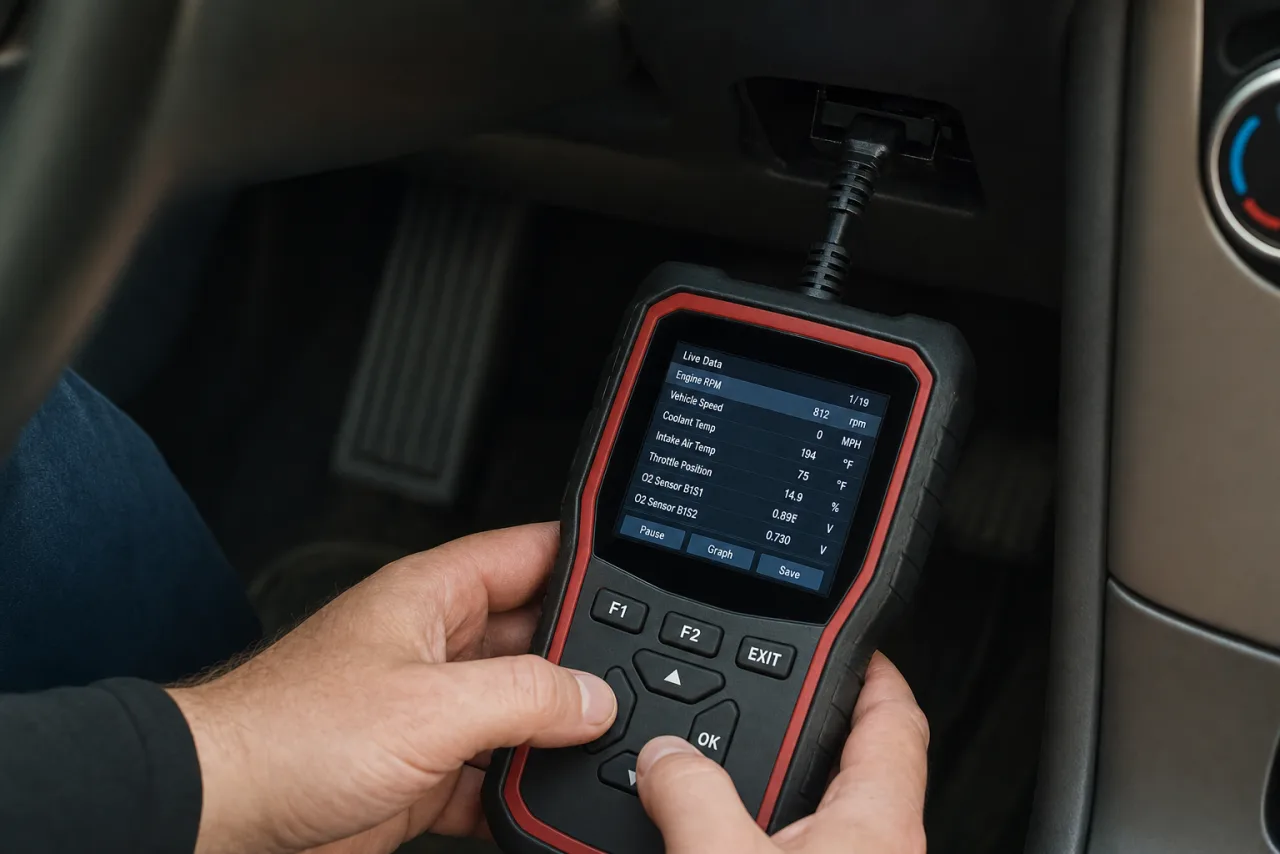
Try the spare key. If the car starts with one key but not the other, it is a key/immobilizer issue, not a mechanical one. An OBD2 scanner can read body/security codes on many cars, though full immobilizer diagnosis sometimes needs a dealer-level tool. Our OBD2 scanner guide covers what a cheap scanner can and can’t see, and the check engine light guide explains codes generally.
- Key reprogramming or a new transponder key: $50 to $300 depending on the car and whether a dealer is needed.
- Immobilizer module repair: varies widely, from a fuse or connector to a several-hundred-dollar module.
What it means when buying a used car
An intermittent no-start is a nightmare to inherit, so probe for it before you buy:
- Insist on a cold start. Ask the seller not to warm the car before you arrive, and start it yourself. A car that starts instantly cold is a good sign; hesitation, slow cranking, or repeated attempts is a warning.
- Check the battery age (there is often a date sticker) and note if there are signs of frequent jump starts.
- Test both keys if the car has two, to flush out immobilizer trouble.
- Plug in an OBD2 scanner for stored charging-system or security codes.
A pre-purchase inspection app like MotoPPI prompts you through a cold start, the OBD2 read, and the battery check as part of the routine, so an intermittent starting gremlin is more likely to reveal itself while you can still walk away. See how to inspect a used car.
The bottom line
Diagnosing a no-start is mostly about listening. Nothing or clicking points at the battery; a single click with a good battery points at the starter; a healthy crank that won’t fire, plus a security light, points at the immobilizer. Work from cheapest to most expensive, rule out the battery and its connections first, and you will avoid throwing money at the wrong part. And when you are buying, a cold start you perform yourself is one of the most revealing tests there is.