You turn the key or press the start button, the dash lights up, but the engine just will not fire, and a little padlock or “security” light is blinking at you. That blinking light is the immobilizer, the electronic anti-theft system built into nearly every car made in the last 25 years, telling you it does not recognize the key. Immobilizer problems are frustrating because the car is mechanically fine: it has fuel, spark, and a good battery, but the computer is deliberately refusing to let it start.
Understanding how the immobilizer works and what makes it act up can save you a tow bill and a lot of panic. This guide covers immobilizer symptoms, why the car will not start, what to do when you are stuck, rough repair costs, and what to check when buying a used car with electronic keys.
What the immobilizer does
The immobilizer is an anti-theft system that stops the engine from starting unless it detects the correct key. Your key (or key fob) contains a tiny transponder chip with a unique code. When you insert or bring the key near the ignition, an antenna ring reads the chip and compares its code to what the car’s computer expects. If they match, the computer allows fuel and spark and the engine starts. If they do not match, or the system cannot read the chip at all, the immobilizer keeps the engine disabled. This is why a copied key cut at a hardware store, without the chip programmed, will turn the ignition but never start the car.
Because it is an electronic security layer, an immobilizer fault presents as a no-start with the engine cranking (or not) but never catching, and a security warning light on the dash.
Symptoms of an immobilizer problem
- A blinking security or padlock light on the dash, often flashing faster or staying solid when you try to start.
- The engine cranks but will not start, or on push-button cars, nothing happens even though the dash powers up.
- The car starts and immediately stalls, a classic sign the immobilizer briefly allowed start then cut fuel because it lost the key signal.
- The key fob suddenly not being recognized, even though it was working yesterday.
- Intermittent no-starts that come and go, often tied to a weak fob battery or a faulty antenna.
If the dash is dead and nothing lights up, that is more likely a battery or starter issue than the immobilizer; see our guide on why a car won’t start to tell the difference. An immobilizer fault specifically involves the security light and a car that has power but refuses to run.
Common causes
- A dead or weak key fob battery, so the transponder cannot be read reliably. This is the single most common cause and the easiest fix.
- A damaged or demagnetized transponder chip in the key.
- A faulty antenna ring around the ignition that reads the chip.
- A drained or weak car battery, which can cause security systems to behave erratically and refuse to authorize a start.
- Wiring or module faults, or a corrupted computer that has lost its stored key codes.
- Using the wrong key or an unprogrammed spare.
What to do when you are stuck
- Try the spare key. If the spare starts the car, the problem is with the first key, likely its battery or chip.
- Replace the fob battery. A fresh coin cell fixes a surprising number of “won’t start” immobilizer faults.
- Hold the fob against the start button on push-button cars. Most have a backup where touching the fob to the button lets the antenna read a weak transponder directly.
- Check the car battery. A weak main battery can trigger security faults; jump-starting or charging it may restore normal behavior. Our jump-start guide covers the safe way.
- Look for a bypass procedure in your owner’s manual; some cars have a way to enter a code or cycle the ignition to reset the system.
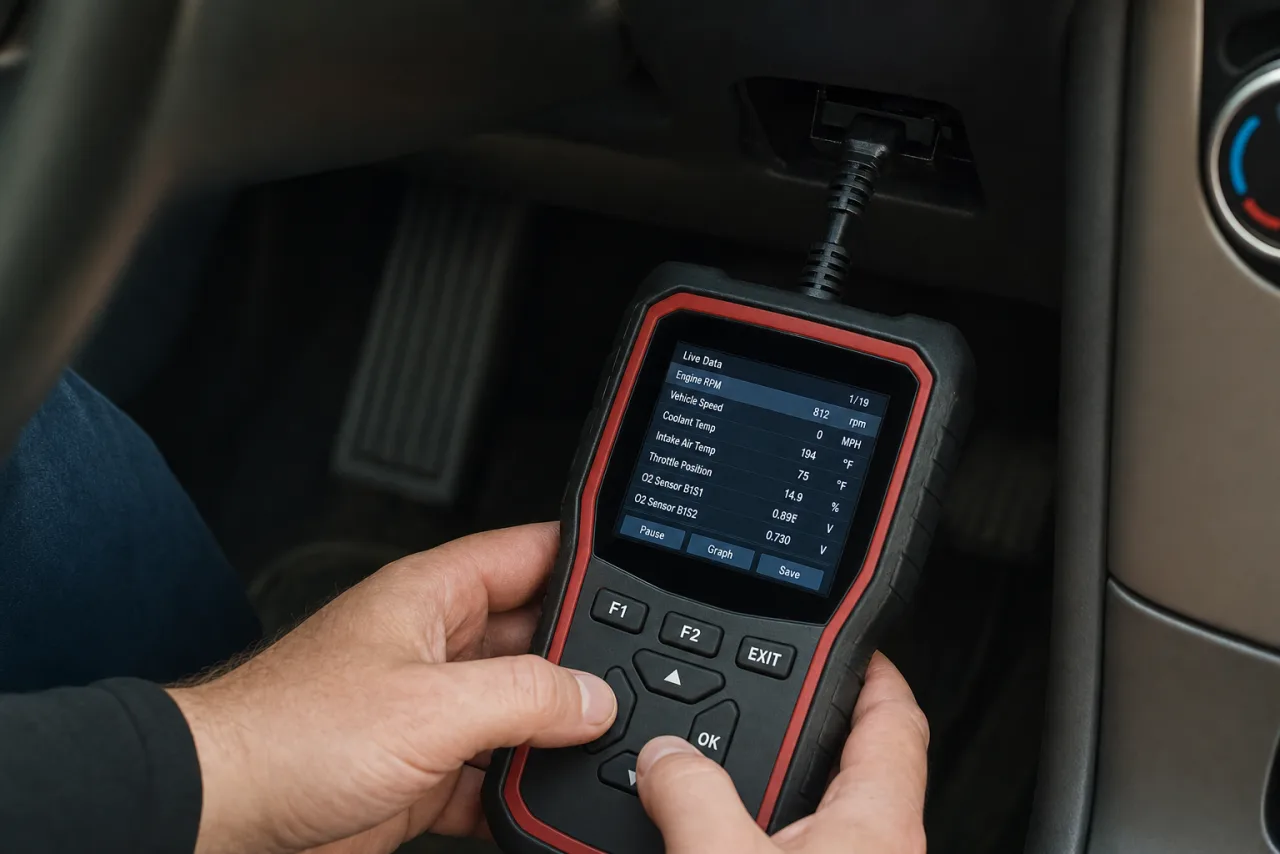
- Scan for codes. An OBD scan can reveal immobilizer or key-related fault codes and point you to the exact culprit.
If none of that works, the car likely needs a dealer or locksmith to reprogram keys or repair the module.
Repair and key costs
Costs vary widely depending on what failed. A fob battery is a few dollars. A replacement transponder key that needs cutting and programming typically runs $50 to $250 for many cars, and more for high-end or push-button smart keys, which can reach $200 to $500 or higher once programming is included. Repairing a faulty antenna ring or immobilizer module is a shop job, often a few hundred dollars in parts and labor. Reprogramming keys usually requires dealer or locksmith equipment, so factor that in.
What this means when buying a used car
Electronic keys and immobilizers are a real consideration on a used car:
- Make sure you get at least two working keys. A single key means a costly replacement if it is lost, since programming a new one is not cheap.
- Test every key in the deal to confirm each starts the car.
- Watch for a security light that flickers or a car that is slow to start, which can hint at a weak antenna or aging system.
- Scan for stored immobilizer codes as part of the check.
A quick electronic check catches these before you buy. The MotoPPI app runs an OBD scan for security and no-start related codes and walks you through a checklist that includes confirming you have working keys, so you do not inherit a car with a temperamental immobilizer and only one fob. See how to inspect a used car for the complete process.
Most immobilizer scares end with a fresh fob battery or the spare key. Keep two working keys, replace a weak fob battery before it strands you, and remember that a blinking security light means the car is fine but the electronics do not recognize the key, not that the engine is broken.