Ask ten people which fuel is “best” for a used car and you will get ten confident, contradictory answers. Diesel is dead. No, diesel is the only sensible motorway car. Electric is the future. No, electric is a battery-shaped money pit. The truth is duller and more useful: there is no best fuel, only the right fuel for how you actually drive. Get that match right and you will save a fortune. Get it wrong and you will pay for it every month at the pump, at the tax renewal, and at the clean-air-zone camera.
This guide cuts through the tribalism. It covers what petrol, diesel, hybrid and electric each do well on the UK used market, the running costs that separate them, and - because this is a used car, not a showroom fantasy - the specific things to check on each type before you buy.
Start with your mileage and your routes
Before you even think about fuel type, answer two questions: how many miles a year do you cover, and where? The UK average is roughly 7,000 to 10,000 miles a year, and most of that, for most people, is short local trips. Your annual mileage decides almost everything - which is why it is worth reading alongside our piece on how many miles is too many, because the same figure drives both decisions.
- Low annual miles, mostly town: petrol or a self-charging hybrid. You will never recoup a diesel’s higher price in fuel savings, and a town-only diesel will punish you (more on that below).
- High annual miles, mostly motorway: diesel still makes a strong case, or a modern petrol/hybrid if you want to dodge clean-air-zone worries.
- Predictable daily commute with home charging: electric, easily, if the sums on charging work.
The four options on the UK used market
Petrol
The default, and for good reason. Petrol cars are cheaper to buy used, cheaper to insure, mechanically simpler and don’t care whether you do two miles or two hundred. Economy is the weak point - the pump costs you more per mile than a diesel on a long run - but with petrol hovering around the mid-130s to 140s pence per litre and no DPF to worry about, it is the low-hassle choice for most buyers doing average miles. This is why petrol dominates our roundup of what you can buy for £3,000, £8,000 or £15,000.
Diesel
Diesel earns its keep on long, steady journeys, where its economy and torque are genuinely hard to beat. The problem is everything else. Diesels are the prime target of the UK’s clean air zones - Birmingham, Bristol, Sheffield and others charge older, non-compliant diesels a daily fee, and London’s ULEZ covers the whole of Greater London. To dodge the charge a diesel generally needs to meet Euro 6; anything older risks a daily penalty every time you drive into a zone. Buy a diesel only if you do the miles to justify it and your regular routes are charge-free.
Hybrid
A sensible middle ground. A self-charging (full) hybrid like a Toyota recovers braking energy and runs on the electric motor at low speeds, which makes it excellent in town - exactly where petrol and diesel are least efficient. A plug-in hybrid (PHEV) adds a bigger battery and a proper electric-only range, brilliant if you can charge at home and your commute fits the battery, but heavy and thirsty if you treat it as a normal petrol car and never plug it in. Hybrids also tend to fall into friendlier road tax (VED) and company-car bands.
Electric
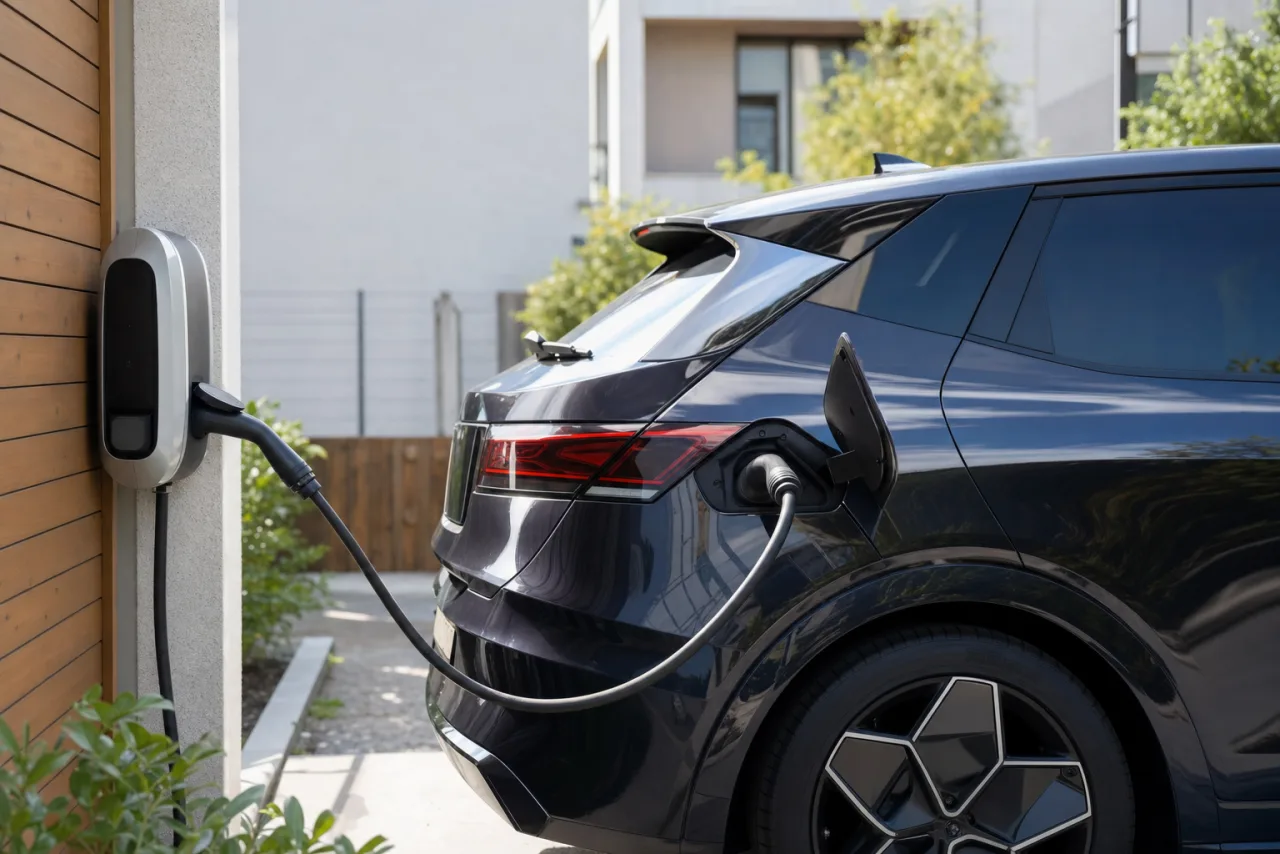
For the right driver, a used EV is a revelation: cheap to run if you charge at home, smooth, quiet, and cheap to service with no oil, no cambelt, no clutch. The catches are up-front price, public charging costs that can rival petrol on the expensive rapid networks, and range anxiety if you cannot charge at home. Used EV values have fallen sharply, which makes them a bargain if the ownership setup suits you. We cover the whole picture - battery worries included - in buying a used electric car in the UK.
The running-cost reality
Fuel is only one column in the spreadsheet. Before committing to a fuel type, weigh up:
- Fuel or charging cost per mile. Diesel wins on long motorway runs; a home-charged EV wins overall; petrol sits in the middle; PHEVs swing wildly depending on whether you actually plug in.
- Road tax (VED). Bands depend on registration date and emissions. Note that from April 2025 EVs are no longer exempt from VED, and cars with a list price over £40,000 attract the expensive-car supplement - worth checking on a pricier used EV.
- Clean air zones and ULEZ. A daily charge in a non-compliant car adds up fast for anyone commuting into a zone. This alone can decide petrol over diesel.
- Insurance and servicing. EVs are cheap to service but can be pricier to insure; diesels carry DPF and turbo risks; hybrids add battery complexity.
We put real numbers to all of this in used-car running costs: tax, MOT and insurance.
What about the 2035 phase-out?
You have probably seen the headlines about petrol and diesel being “banned.” The plan to end sales of new pure petrol and diesel cars - the date has bounced between 2030 and 2035 amid political wrangling - applies to new cars only. Buying and driving a used petrol or diesel will remain perfectly legal well beyond that, and a healthy used market will continue. Do not let the phase-out talk panic you out of a sensible used buy; do let it inform your view of future resale values.
What to check on each type - used
This is where a used car diverges from a new one. Each fuel type has its own expensive weak spot.
- Diesel: the DPF and the turbo. A diesel that has lived in town may have a clogged or bodged DPF - a four-figure repair. Look for a warning light, watch for excessive smoke, and be suspicious of a low-mileage town diesel. Check the EGR valve and listen for turbo whine.
- Petrol: the cambelt (timing belt) or timing chain. A belt that snaps destroys the engine, so confirm from the service history it has been changed on schedule. Chain-driven engines can rattle on cold start when the chain is stretched - listen carefully.
- Hybrid: the hybrid battery and the state of the 12V battery. Ask for evidence of battery health; a tired hybrid pack is a serious cost. On PHEVs, confirm it actually charges and holds its electric range.
- Electric: battery state of health (SoH) is everything. A pack that has degraded significantly means less range and lower value. Ask for a battery health readout, check how many rapid-charge cycles it has seen, and confirm whether the battery is owned outright or leased.
Let MotoPPI match the car to the fuel
The right fuel type is the easy part; proving a specific used example is sound is the hard part. MotoPPI helps on both fronts: point your phone at the car and the app pulls its full history across more than 20 databases and walks you through a model-specific inspection - the DPF and turbo checks on a diesel, the cambelt history on a petrol, the battery-health questions on a hybrid or EV - then estimates likely repair costs. Your first check is free, and it is available now on the App Store.
Download MotoPPI on the App Store and check your next car for free.
Frequently asked questions
Is a used diesel still worth buying in the UK?
Yes, if you do high motorway mileage and your regular routes are free of clean air zone charges. For a Euro 6 diesel that stays out of ULEZ and CAZ areas, the economy on long runs is hard to beat. For low-mileage town use, avoid diesel.
Do I have to pay ULEZ or a clean air zone charge in a petrol car?
Most petrol cars meeting Euro 4 (broadly 2006 onwards) are compliant with ULEZ and most clean air zones, so no daily charge. Always check the specific car’s compliance and the specific zone’s rules before assuming.
Are used electric cars a good buy now?
They can be excellent value, as used EV prices have dropped sharply. The deal depends on being able to charge at home and on the battery’s state of health. Public rapid charging can cost as much as petrol, which erodes the savings.
Will I be able to drive my petrol or diesel car after 2035?
Yes. The phase-out applies only to sales of new petrol and diesel cars. Buying, owning and driving used petrol and diesel cars will remain legal well beyond the deadline.
Read next
- Buying a used electric car in the UK - range, charging and battery health.
- Used-car running costs: tax, MOT and insurance - the full cost of ownership.
- How many miles is too many - the number that drives your fuel choice.
Do you inspect cars for a living? Have a look at MotoPPI for partners.