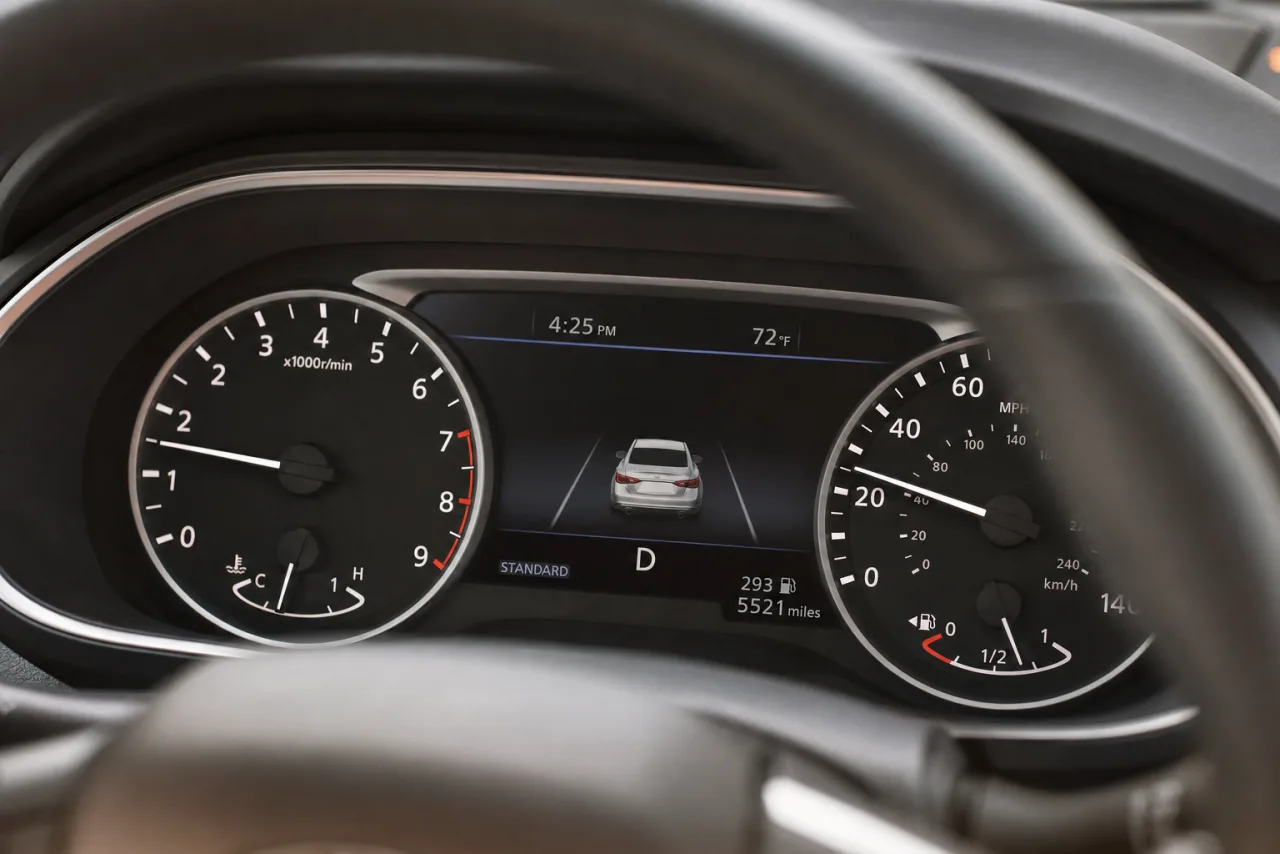
Walk onto any forecourt and you will watch buyers do the same thing: they glance at the odometer, see a big number, and mentally cross the car off the list. It is the oldest instinct in used-car buying, and it is mostly wrong. A well-maintained diesel with 120,000 motorway miles can be a far better buy than a neglected city runabout showing 38,000. The number on the dash is only useful once you know the story behind it.
So how many miles is too many? The honest answer is that there is no magic figure. A serviced modern engine will happily see past 150,000 miles. What matters is the mileage relative to the car’s age, how those miles were racked up, and - the part most buyers skip - whether the reading is even real.
The number that matters: miles per year
The single most useful thing you can do with an odometer reading is divide it by the car’s age. That gives you the average annual mileage, and it tells you far more than the raw total.
The UK average sits somewhere around 7,000 to 10,000 miles a year, and has drifted towards the lower end since fuel got expensive and working from home became normal. So a five-year-old car with 40,000 miles is bang on average - nothing to worry about. A five-year-old car with 90,000 is a high-miler, which is not automatically bad but should be reflected in the price. And a five-year-old car with 12,000 miles? That is where you should slow down and start asking questions, which we will come back to.
There is also a quality difference hiding inside that average. Motorway miles are gentle: steady speeds, few cold starts, the engine sitting at its operating temperature for hours. Stop-start town miles are brutal by comparison, hammering the clutch, brakes, gearbox and - on diesels - the particulate filter. Two cars with identical readings can be in wildly different condition depending on how they earned those miles. A rep’s motorway car is often the better bet, even if the number looks frightening.
Why suspiciously low mileage is a red flag
Here is the counterintuitive bit. A low reading can be worse news than a high one.
Cars are machines that prefer to be used. A car that has sat for long stretches, or only ever done two-mile school runs, suffers in ways a hard-working motorway car never does:
- Diesel particulate filters clog. A DPF needs sustained higher-speed running to burn off (regenerate). A low-mileage town diesel is the classic candidate for an expensive blocked DPF.
- Batteries and hybrids degrade from standing. Twelve-volt batteries flatten and sulphate; hybrid and EV packs do not like sitting at extremes of charge. We go deeper on matching engine type to real use in our guide to petrol, diesel, hybrid or electric on the used market.
- Rubber, seals and fluids age by the calendar, not the mile. Perished hoses, tired brake fluid and cracked tyres do not care that the car has only done 15,000 miles.
- Corrosion. A car left standing outside through a decade of salted British winters can rot underneath regardless of what the dashboard says.
Genuinely low mileage exists, of course - the proverbial second car owned by someone who barely drove. But “low mileage for the year” is also exactly what a clocker wants you to see, because it justifies a higher price. Which brings us to the thing you absolutely must check.
Is the mileage even real? The UK’s free superpower
The UK gives used-car buyers a tool most countries would envy, and it is completely free: the GOV.UK MOT history at gov.uk/check-mot-history. Type in the registration and it lists every MOT test since 2005 - and critically, the recorded mileage at each test.
Read those numbers in sequence. In an honest car they only ever climb, by a sensible amount each year. The moment you see a mileage drop, or a couple of oddly flat years followed by a jump, you are almost certainly looking at a clocked car - an odometer wound back to make it look younger and worth more. People assume clocking died with mechanical dials; it did not. Modern electronic odometers can be rewritten in minutes with a cheap tool, and it remains one of the most common used-car scams in the country. We break down exactly how it works, and how much of the market is affected, in clocking, cloning and outstanding finance.
The MOT record is your first and best defence, but it is not the whole picture. Back it up with:
- Service history. A stamped book or digital service record should show mileages that climb in step with the MOT record. If a service invoice shows more miles than a later MOT, something is very wrong.
- A paid history check for the things GOV.UK cannot see. The free MOT data is superb on mileage but silent on outstanding finance, write-offs and stolen markers. We compare the two in free GOV.UK checks vs a paid HPI check.
Wear tells: what the car’s own condition reveals
Numbers can be forged. Physical wear is much harder to fake, and it should always agree with the odometer. When it does not, believe the car, not the dashboard.
On a genuinely low-mileage car, the touch points look barely used. On a clocked one, they give the game away:
- Steering wheel and gear knob - a polished, shiny rim on a “40,000-mile” car is doing perhaps three times that.
- Seat bolsters - the driver’s outer bolster collapses and creases with use; a saggy one contradicts a low reading.
- Pedal rubbers - worn smooth or replaced-looking rubbers on a low-miler are a giveaway.
- The driver’s floor mat, door handles and gearstick gaiter all wear in proportion to real use.
None of this is subtle once you know to look, and it slots naturally into a proper inspection. Our used-car test-drive checklist walks through the wear points alongside the mechanical checks so you do not miss anything under pressure from a keen seller.
Turning mileage into money
Once you have established the mileage is genuine, it becomes a negotiating tool rather than a dealbreaker. A high but honest, well-serviced motorway car should be priced below a low-mileage equivalent - that is the deal you are getting in exchange for the shorter remaining life and the higher-mileage image. Use it. Point to the reading, point to the upcoming service items that high mileage brings (cambelt, clutch, suspension bushes), and let the number work for you rather than against you. Our guide to haggling a used-car price turns these observations into pounds off the asking price.
Let MotoPPI read the story for you
Cross-referencing the MOT mileage record, the service history and the physical wear is exactly the sort of careful, boring work that gets skipped when a seller is hovering. MotoPPI does it for you: point your phone at the car and the app pulls the vehicle’s history across more than 20 databases - flagging mileage discrepancies automatically - then walks you through a model-specific inspection so the wear tells and the numbers actually line up. Your first check is free, and the app is available now on the App Store.
Download MotoPPI on the App Store and check your next car for free.
Frequently asked questions
How many miles is too many for a used car in the UK?
There is no hard limit. A well-serviced modern car can pass 150,000 miles comfortably. What matters more is the average annual mileage - around 7,000 to 10,000 miles a year is typical - how the miles were driven, and whether the reading is genuine.
Is low mileage always a good thing?
No. A car that has done very few miles for its age may have suffered from standing: clogged DPFs on diesels, degraded batteries, perished rubber and corrosion. “Suspiciously low for the year” is also exactly what a clocker wants you to see, so verify it.
How do I check if a car’s mileage is genuine?
Use the free GOV.UK MOT history tool, which lists the recorded mileage at every test since 2005. The numbers should only ever rise. Cross-check against the service history and the physical wear on the steering wheel, seats and pedals.
Do motorway miles matter less than town miles?
In effect, yes. Motorway miles are gentler on the engine, clutch, brakes and DPF than stop-start town driving. A high-mileage motorway car can be in better mechanical shape than a low-mileage town car.
Read next
- Clocking, cloning and outstanding finance - the UK’s big three used-car scams.
- Free GOV.UK checks vs a paid HPI check - which tools catch a clocked car.
- Petrol, diesel, hybrid or electric - matching the engine to how you actually drive.
Do you inspect cars for a living? Have a look at MotoPPI for partners.