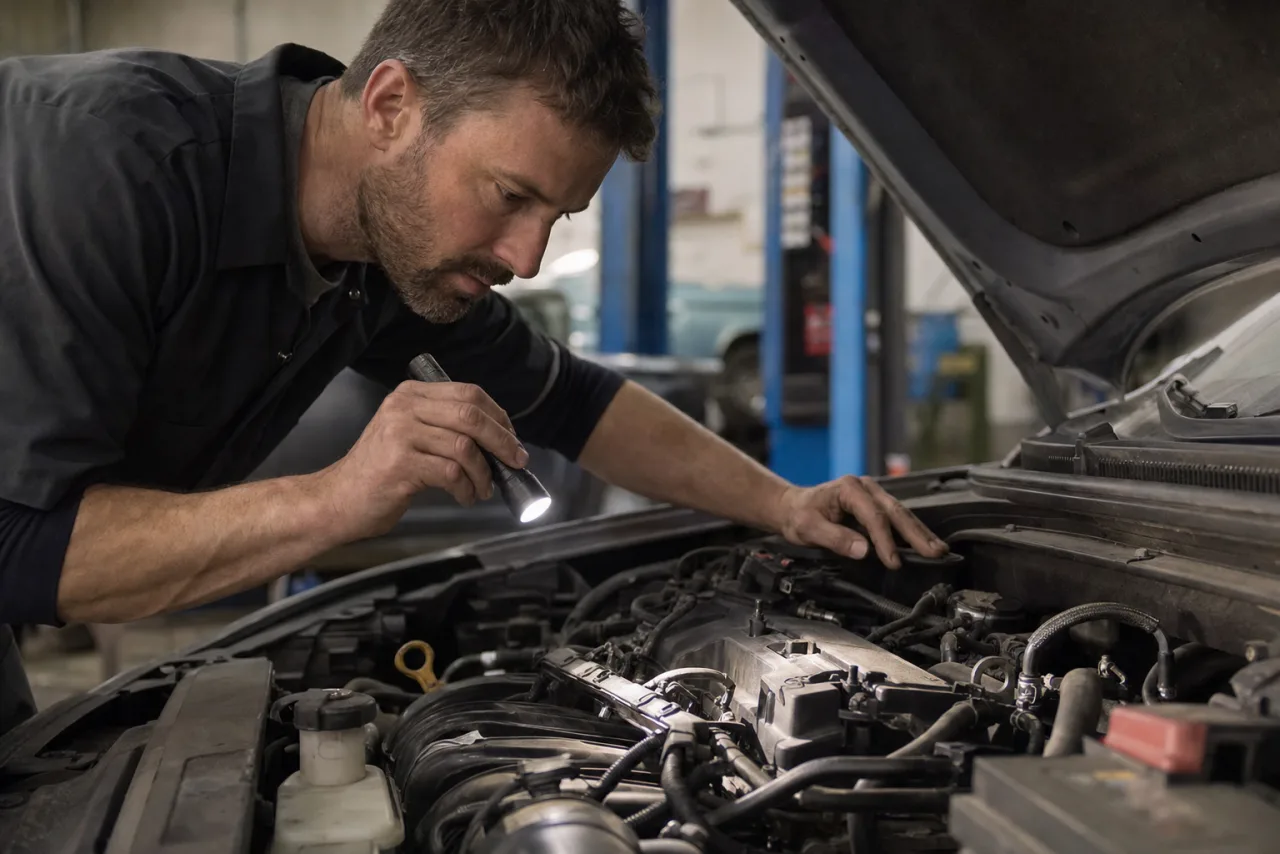
The Ford Fiesta was Britain’s best-selling car for more than a decade, so the used market is flooded with them. That is largely good news for a buyer: plenty of choice keeps prices honest, parts are cheap and every corner garage knows the car inside out. But the sheer volume also means the classifieds are full of tired, neglected and occasionally dodgy examples, and a used Fiesta is not one single car. It is a spread of very different engines and gearboxes, each with its own weak spots.
That distinction matters more than most buyers realise. Two Fiestas advertised at the same money, same year and similar mileage can hide wildly different risks depending on whether there is a 1.25 Ti-VCT or a 1.0 EcoBoost under the bonnet. One might run to 150,000 miles with nothing worse than routine servicing. The other can hand you a four-figure engine bill in the first year of ownership. The purchase price rarely reflects that gap.
This guide walks you through the specific engines, gearboxes and trouble spots so you know which used Fiesta to chase and which to walk away from. Get the engine and the history right and the Fiesta is one of the most sensible small cars you can buy.
Which generation to buy
The two generations you will see most often are the Mk7 (2008 to 2017, including the 2013 facelift) and the Mk8 (2017 to 2023). The Mk7 is the cheap, cheerful option and there are millions of them. The Mk8 feels a class above inside, drives better and holds more of its value, but it also introduced the 1.0 EcoBoost as the mainstream engine, which brings the faults covered below.
If your budget is tight and you mostly potter around town, an honest late Mk7 with the 1.25 petrol is hard to beat for cheap, dependable motoring. If you want something newer and nicer to drive, the Mk8 is the one, but you need to be far fussier about engine history. Whichever you look at, confirm the exact engine from the advert and cross-check it against the registration and the MOT history on GOV.UK, because sellers routinely muddle a 1.0 EcoBoost with a plain 1.0.
Petrol engines
1.25 and 1.4 Ti-VCT
The naturally aspirated 1.25 and, less commonly, the 1.4 Ti-VCT are the simple, bombproof choice. No turbo, no direct injection, no timing belt drama in the same way as the EcoBoost. These engines are gutless on a motorway slip road and drink more fuel than the official figures suggest, but they rarely go wrong. The main things to watch are a rough or lumpy idle (often just coil packs or spark plugs), a rattly heat shield and the usual suspension wear. For a first car or a low-mileage town runabout, this is the least stressful Fiesta engine you can buy.
1.0 EcoBoost, and the wet belt problem
The 1.0 EcoBoost three-cylinder turbo is the engine that made the modern Fiesta feel quick and economical, and it is a genuinely characterful little unit. It is also the one that demands the most homework, because of two well-documented issues.
The first is the wet cambelt. Ford runs the timing belt inside the engine, bathed in oil, on the EcoBoost. Over time the belt degrades and can shed material that blocks the oil pump pickup, which in the worst case starves the engine of oil and destroys it. Ford revised the service interval, and the belt should be changed on time (broadly around every ten years or 100,000 miles, but confirm the current schedule for the specific car). When viewing an EcoBoost, ask for proof of the wet belt change and factor a fresh one into your budget if there is no record.
The second is coolant. Earlier 1.0 EcoBoost engines suffered coolant loss, in some cases linked to a degrading coolant pipe or a cracked cylinder head, which could lead to overheating. Ford ran a coolant-level warning software update and repair campaign. On a test drive, watch the temperature gauge like a hawk, check the coolant level in the expansion tank against the marks, and look for any sweet smell or white residue. Any history of overheating on an EcoBoost is a serious red flag, not a bargaining chip.
The Powershift gearbox
Most used Fiestas are manuals, and the manual is the sensible, cheap-to-fix choice. The clutch and dual-mass flywheel wear like any other, so listen for a rattle at idle that clears when you dip the clutch, and feel for a high or slipping biting point.
The automatic to be wary of is the earlier dry-clutch Powershift dual-clutch gearbox. On the Fiesta and its Ford relatives, these gained a reputation for shudder when pulling away, jerky low-speed shifts and clutch faults, and repairs are not cheap. If you are set on an automatic Fiesta, test it hard in stop-start traffic: it should pull away smoothly with no shuddering, hesitation or clunks. Any of those is a reason to walk away or to negotiate hard. Later automatics improved, but always treat a self-shifting Fiesta with more suspicion than the manual.
Body, suspension and electrics
The Fiesta is generally well protected against rust for its age, but check the usual spots on older Mk7 cars: the rear arches, the bottoms of the doors, the boot floor and around the fuel filler. Kerbed alloys and scuffed bumpers are common on cars that have lived a hard city life, and they hint at how the rest of the car has been treated.
Suspension knocks over speed bumps usually point to worn anti-roll bar links or drop links, which are cheap, or tired shocks and bushes, which cost more. The electric power steering can occasionally throw a fault, so check for a warning light and that the steering is consistently weighted. Inside, test every window, the air conditioning, the heated screen where fitted and the infotainment, because small electrical niggles are common and irritating to chase down.
Used Fiesta prices in the UK
Prices vary enormously with generation, engine, mileage and condition, but as a rough guide for 2026:
- Mk7 Fiesta, 2013 to 2016, 1.25 petrol, 70,000 to 100,000 miles: typically £3,500 to £6,000.
- Mk8 Fiesta, 2017 to 2019, 1.0 EcoBoost, average mileage: usually £7,000 to £10,000.
- Mk8 Fiesta, 2020 to 2022, low mileage or ST-Line: often £10,000 to £15,000, with the hot ST hatch commanding more.
A car priced noticeably below the rest of the market is not a bargain, it is a warning. It usually means hidden accident damage, a clocked odometer or a finance or write-off problem. Because the Fiesta is so common, it is also a favourite for clocking, so verify the mileage against the MOT history rather than taking the dashboard reading on trust. Our guides to clocking, cloning and outstanding finance and how many miles is too many explain how to spot the signs.
What to watch for: the VIN and MOT checklist
Pulling it together into a Fiesta checklist:
- Confirm the exact engine (1.25 Ti-VCT versus 1.0 EcoBoost), because that decides your whole risk profile.
- On any EcoBoost, get proof of the wet cambelt change and check the coolant history for signs of past overheating.
- On any automatic, test hard in traffic for shudder and jerky shifts.
- On cold start, listen for rattles and watch the temperature gauge climb normally.
- Cross-check the MOT history for advisories on corrosion, emissions and suspension, and for a consistent mileage climb with no reversals.
- Run an HPI-style history check for write-off markers, outstanding finance and plate changes.
The VIN and registration unlock a history the seller will not volunteer. Our guide to how to check a used car walks through reading an MOT record and a history report so you do not miss a red flag.
How MotoPPI helps with a used Fiesta
Rather than dragging a mechanic friend to every viewing, you can run a structured inspection yourself. MotoPPI pulls the vehicle history from the registration, guides you through a model-aware viewing checklist that flags the specific weak points of the version in front of you, helps you measure paint thickness to spot hidden repairs, and reads fault codes from the OBD port. It then packages everything into a report that doubles as a strong negotiating tool.
On a car as common and as varied as the Fiesta, that is the difference between buying a sound example and paying a deposit on someone else’s problem. The first check in the app is free, so it is worth starting there before you drive out to view.
Read also
- How to check a used car in the UK
- Free GOV.UK checks versus a paid HPI check
- Used car test drive checklist
- Buying a used Ford Focus: what to check
FAQ
Which Fiesta engine is the most reliable?
The naturally aspirated 1.25 Ti-VCT is the least troublesome, with no turbo and no wet belt. The 1.0 EcoBoost is a better engine to drive and more economical, but only when the wet cambelt has been changed on schedule and there is no history of coolant loss or overheating.
Is the 1.0 EcoBoost wet belt really a problem?
It can be. The belt runs in oil and degrades over time, and if it sheds material it can block the oil pickup and wreck the engine. It is not a reason to avoid the EcoBoost outright, but you must see proof the belt has been changed on time and budget for it if there is no record.
Should I avoid the Powershift automatic?
Be cautious with the earlier dry-clutch Powershift, which is known for shudder and jerky low-speed shifts. Test any automatic Fiesta hard in stop-start traffic. Most used Fiestas are manuals, and the manual is the cheaper, safer bet.
How much should I pay for a used Fiesta?
Roughly £3,500 to £6,000 for a tidy Mk7 1.25, £7,000 to £10,000 for a mid-mileage Mk8 EcoBoost, and £10,000 to £15,000 for a low-mileage or ST-Line Mk8, with the ST costing more.
How do I spot a well-kept Fiesta?
Look for a consistent, unbroken MOT history with sensible mileage, a full service record, proof of the wet belt change on EcoBoost cars, unmarked alloys and a clean interior. Cross-check the mileage against the MOT record and run a history check for write-offs and finance.